
Doberman protection training days don’t always start with sharp drive, laser focus, and perfect engagement.
Sometimes they start like this — with a working-line Doberman strolling onto the field as if she’d just checked out of a wellness retreat.
Table of Contents
It’s been somewhere around seven weeks since Jett’s last proper protection training session — and it showed.
She walked onto the field like she’d just rolled out of a cabana at an all-inclusive resort. Tail loose, soft eyes, no urgency whatsoever.
I could practically hear her saying, “We do fun training now, yes? No pressure, just vibes?”
Meanwhile, I’m prepped like we’re gearing for deployment: long line, her training bag, working vest, mental readiness, the whole kit.
We started on the obstacle course because apparently when you’ve been on holiday, the best way to wake up your working dog’s brain is to throw her at A-frames, angles, and problem-solving structures.
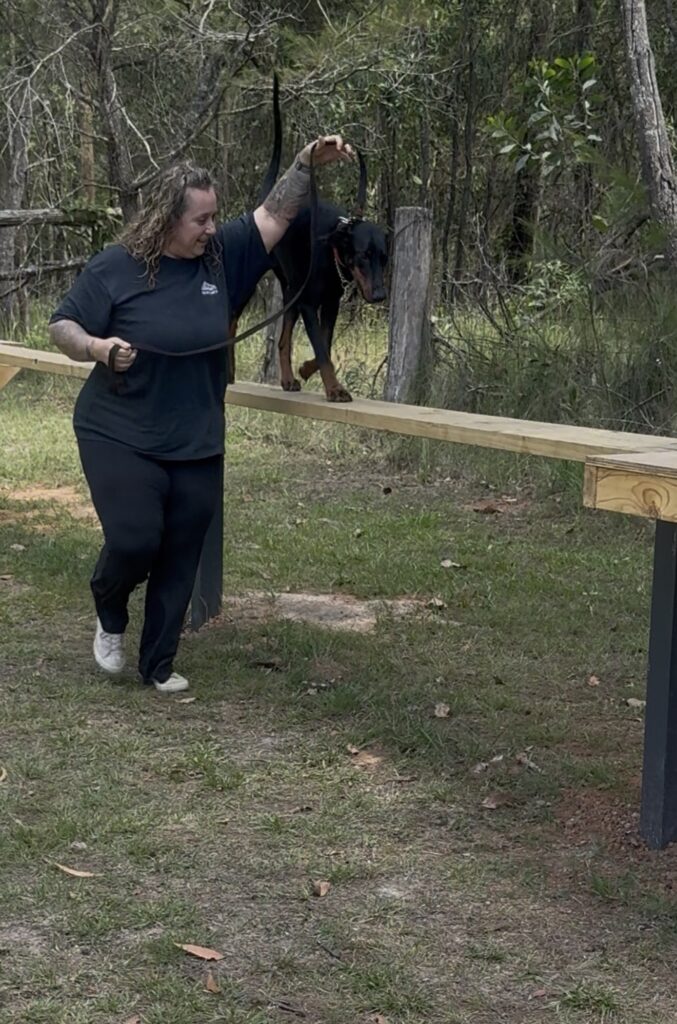
The trainers have built new obstacles—there is a large A-frame which is super steep on one side, almost like a wall climb, and less steep on the other, and a smaller angled ramp where she has to walk across a plank. Real working dog stuff. The kind of obstacles that teach a dog how to commit, how to problem-solve, and how to choose forward.
Jett approached the big A-frame, sniffed it like it was a historical landmark, then casually strolled up and over it like she’d been doing CrossFit in her spare time. She did pause at the top about 2 steps off the podium, which was great for me as she raced up otherwise and I was trying to keep up. But then she quickly made it over that little hurdle and onto the podium with a bit of encouragement.
The smaller A-frame? Faster. Cleaner. Less hesitation. Almost like she remembered, “Ah yes — this is my job.”
Obedience and Getting Her Head Back in the Game
We moved inside to reset and work obedience. This is where I could see the difference between being technically correct — and being switched on.
We’ve also been working a lot on her obedience during her time off. She showed some hesitation to correction with the check chain before her heat started and before she went on break. So we used it instead with obedience and lots of wins so she didn’t misinterpret the check as a correction all the time, or develop that anticipation about it.
She hit her sits, downs, fronts, pivots — but soft. Fluid. Almost leisurely. Not sloppy, just… vacation-mode obedience. We even got her off leash with the decoy still in the room, not sleeved or suited, while I walked around her.
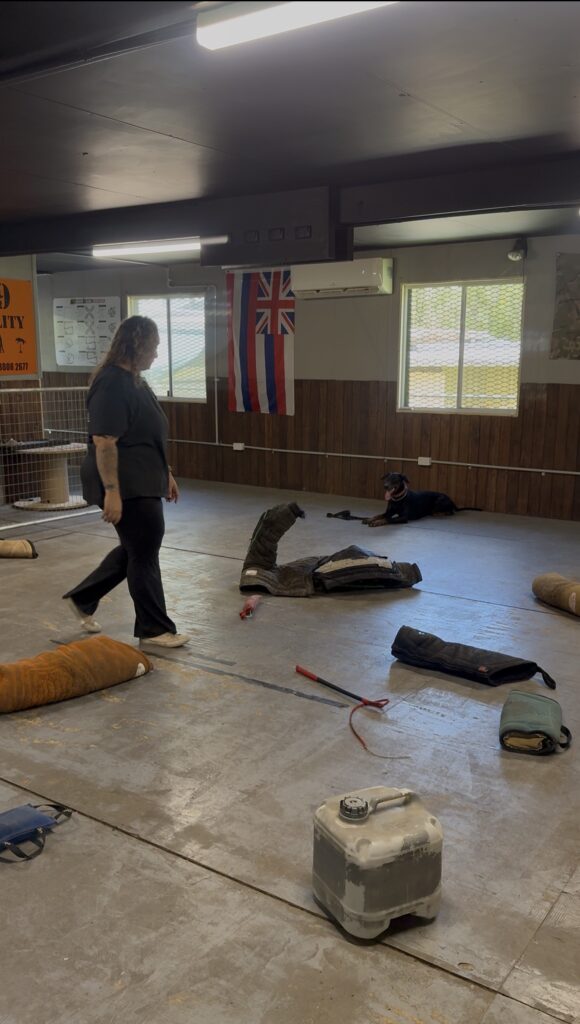
We had a bunch of distractions on the ground in the form of sleeves, tugs, toys and other things that could trigger her interest. She held position well and I am so impressed by her calmness. Even her trainer said she’s much calmer than she has been in a long while.
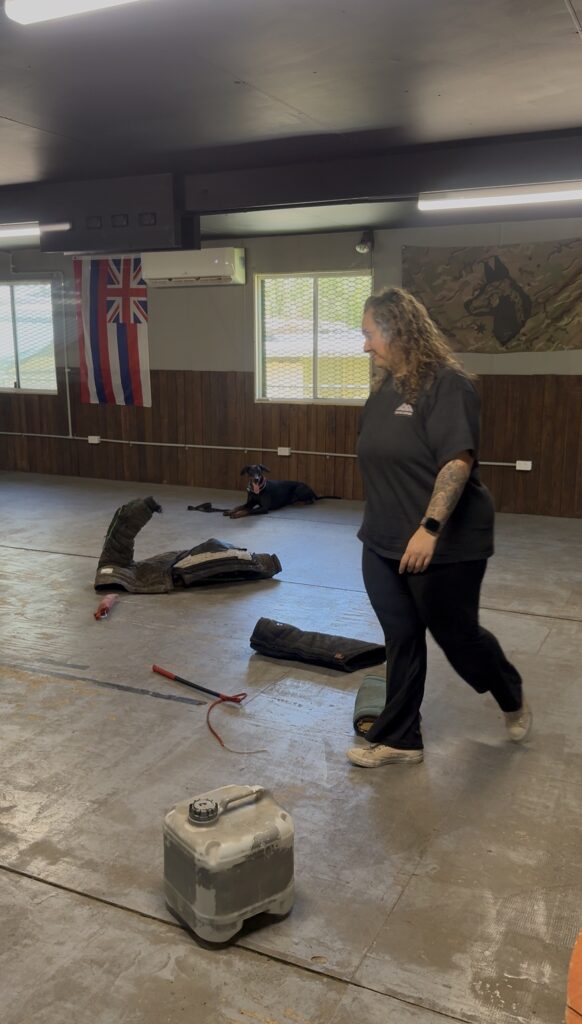
So instead of pushing harder, we layered in structured control — obedience around scattered sleeves. Her job wasn’t to ignore them or suppress drive. It was to hold it and direct it. The trainer said, “Show her she can want it and listen at the same time.” That one stuck.
And I could see it shift. You could almost see her thinking:
“I don’t lose it when I focus — I actually get closer to it.”
I also needed to improve my handling of her here as I would lose some engagement and she would lower her head a bit even in a simple heel, making it harder for me to praise. Justin showed me how he did it with a tug in a heel walk around, by encouraging her to focus on the toy and lift her head up and rewarding that.
Doberman Protection Training is all about Building Drive Back Up (Because Holiday Mode is Real)
We moved into bite work — on leash, not sending. This was important. The goal wasn’t activation or aggression. The goal was clarity and building drive again after time off.
Her first barks were shallow, more like polite requests than confrontation. She also would bite and then let go, not her usual of holding the bite and growling through it.
But then something changed. Her stance firmed. Her breathing deepened. Her bark shifted from “play” to “intention.” Not frantic. Not chaotic. Controlled. Rhythmic. Confident.
And you could see it in her eyes — that moment where thinking and drive finally linked.
Bark and Hold: Rebuilding the Picture and Pushing Her Drive
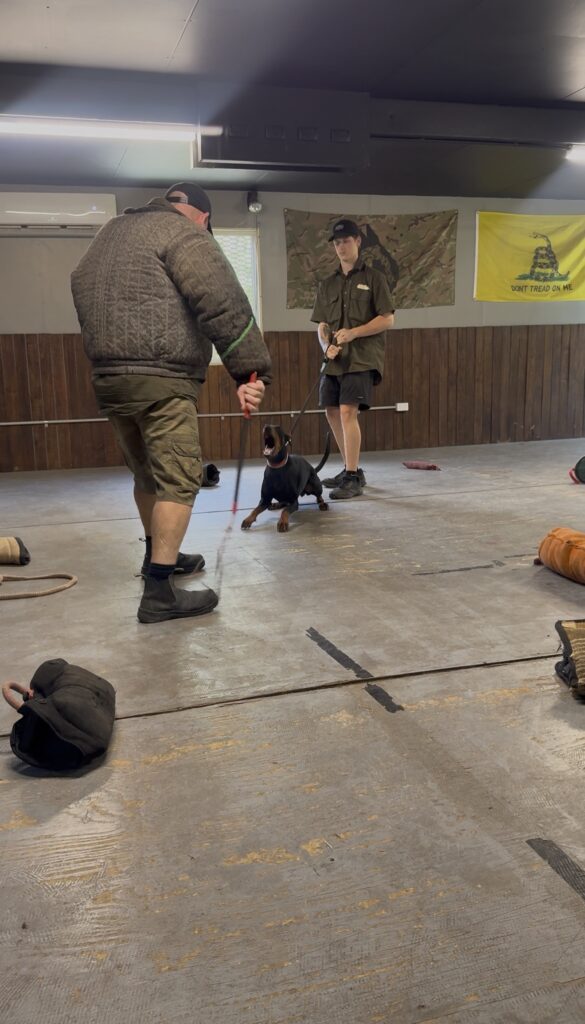
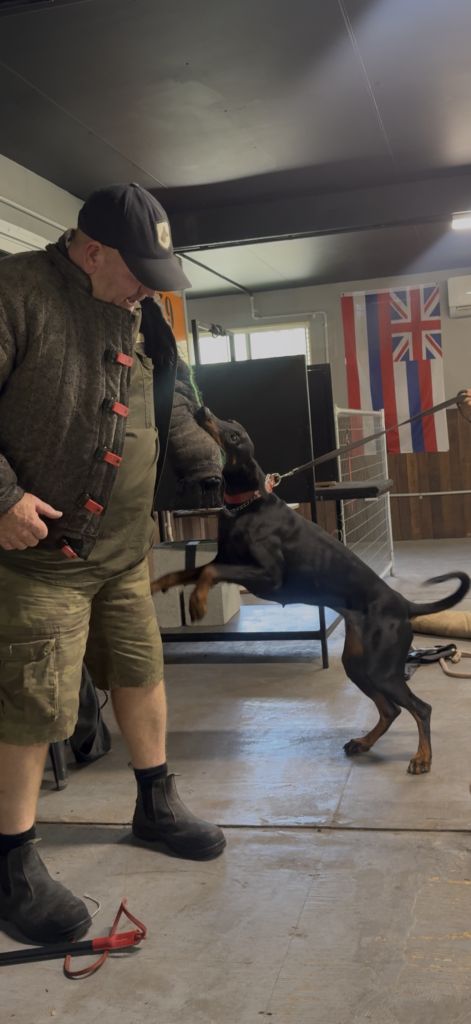
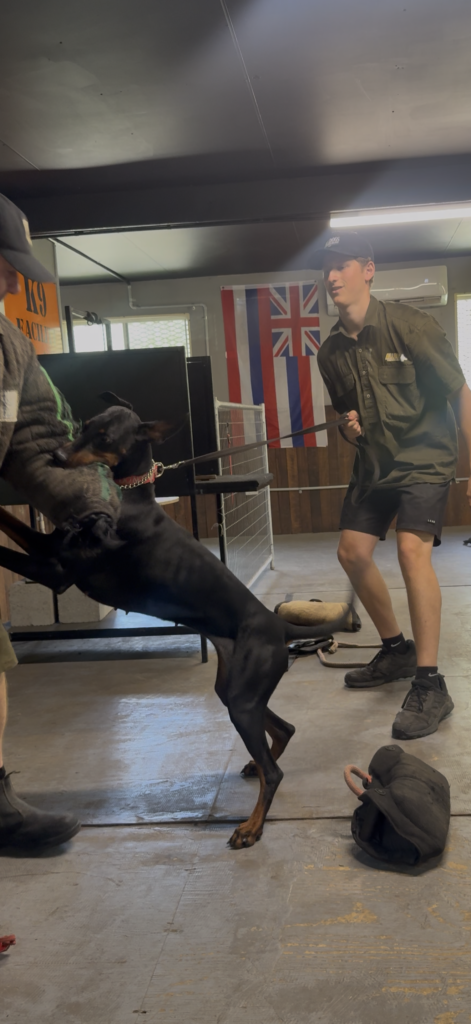
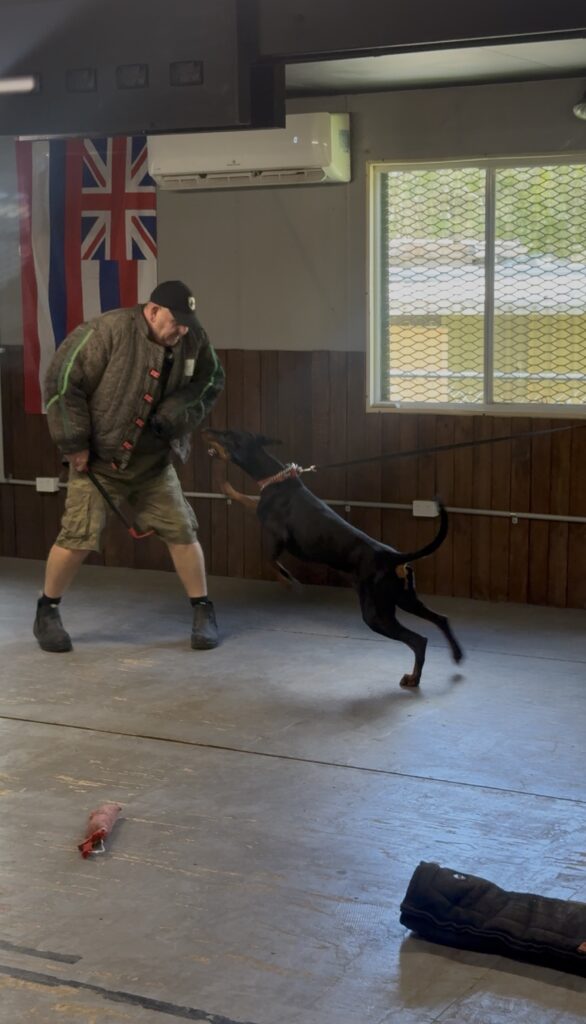
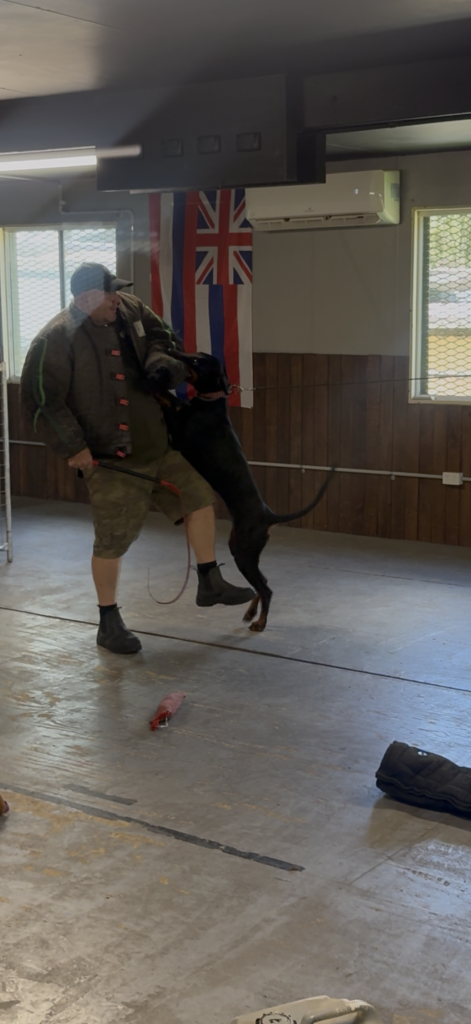
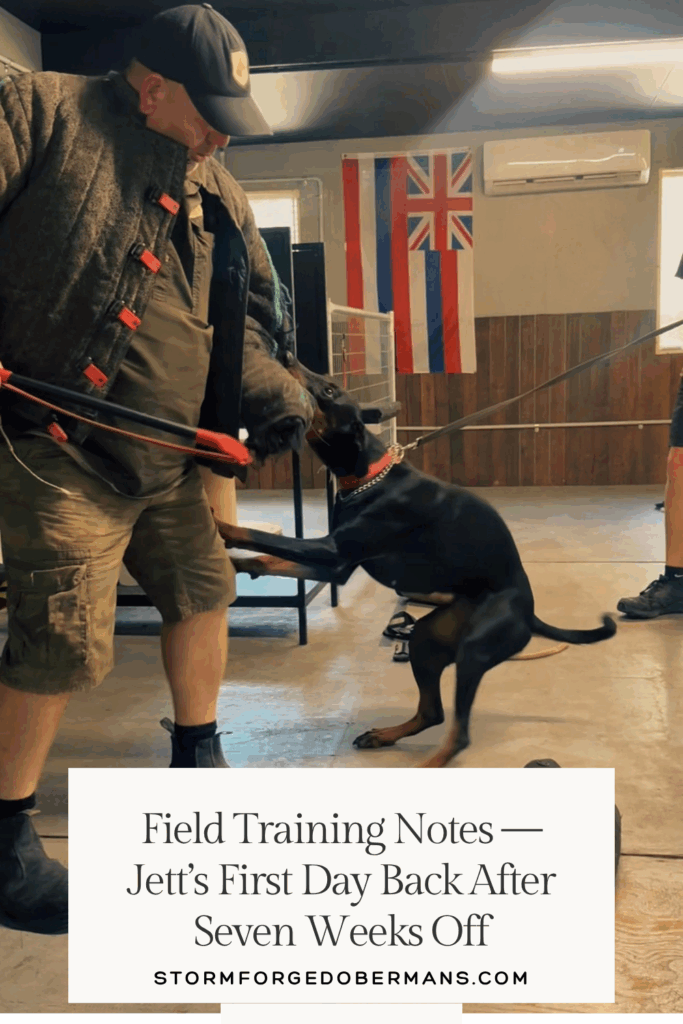
From there, we moved into bark and hold drills with Jamie and Justin. This is where holiday Jett started to fall away and working Jett came back.
At first, her bark was shallow — more of a “hello, I see you” than a proper demand. So Jamie started to push her a bit. He knows exactly which buttons to press without tipping her into chaos. A little pressure, a little movement, a bit of frustration in the right places.
Her bark changed. It dropped into her chest. It got rhythmic, deliberate. Not manic. Not frantic. Just intentional.
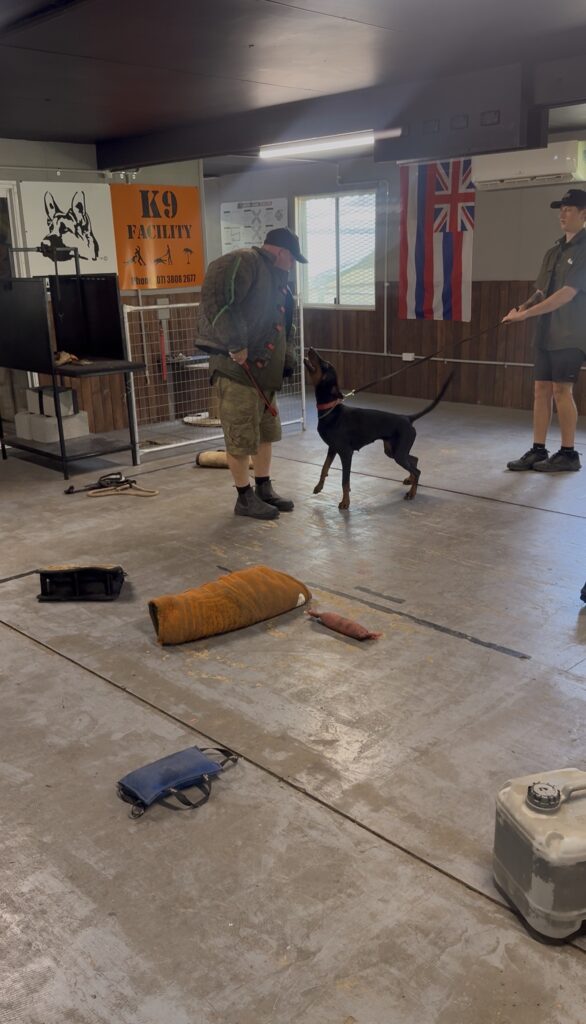
We did several reps of bark and hold, reinforcing her bite, reminding her what the job actually is:
Find the threat. Bark. Hold the picture. Commit when given the cue.
Each time, she fell into that familiar bark-and-hold position faster — body forward, weight shifted, eyes locked in, ready. You could almost see the “vacation fog” lifting. The more clarity she got, the more her drive came back. Not wild energy, but focused energy.
By the last few reps, she wasn’t guessing anymore. She knew the pattern. And she was enjoying it.
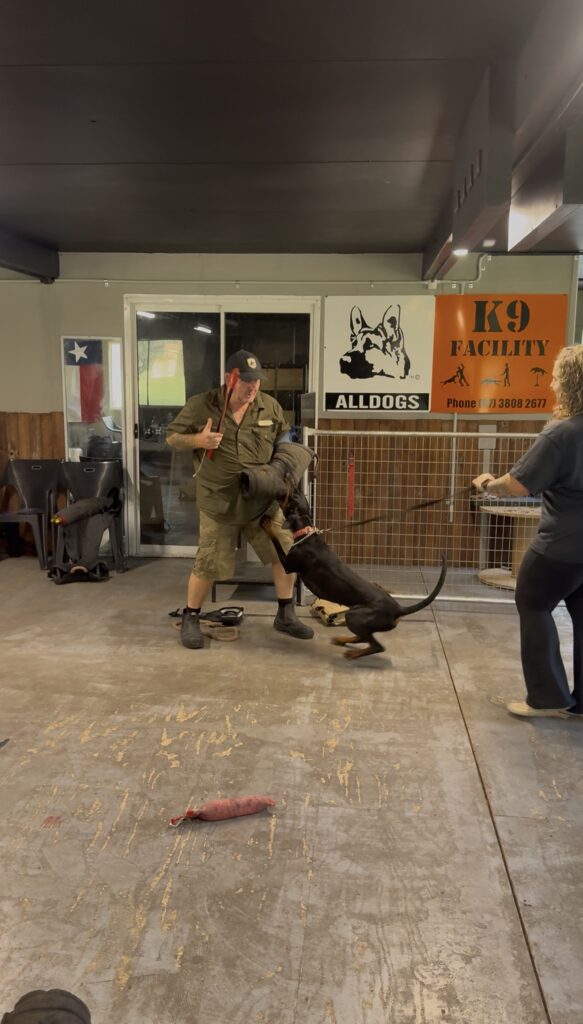
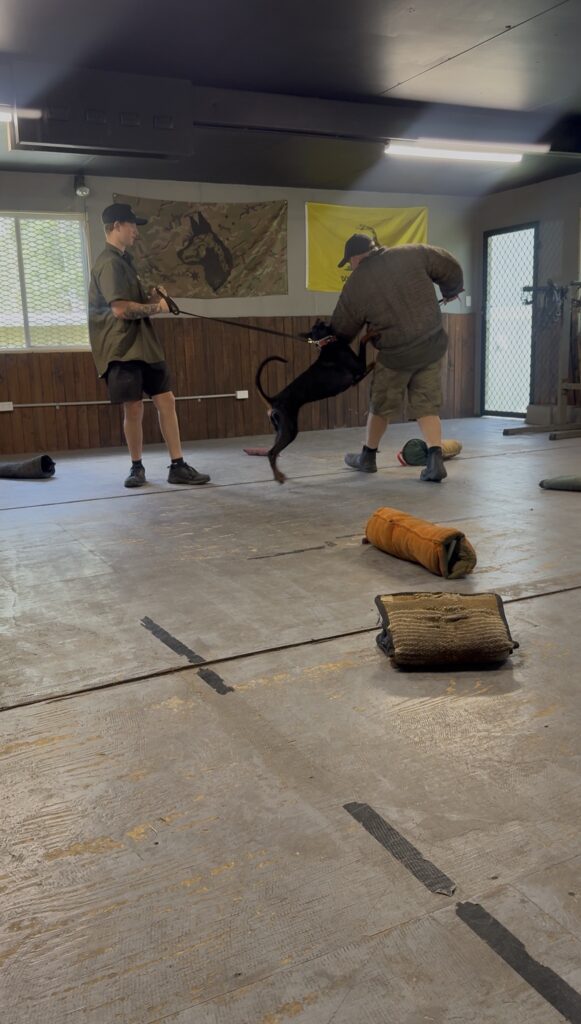
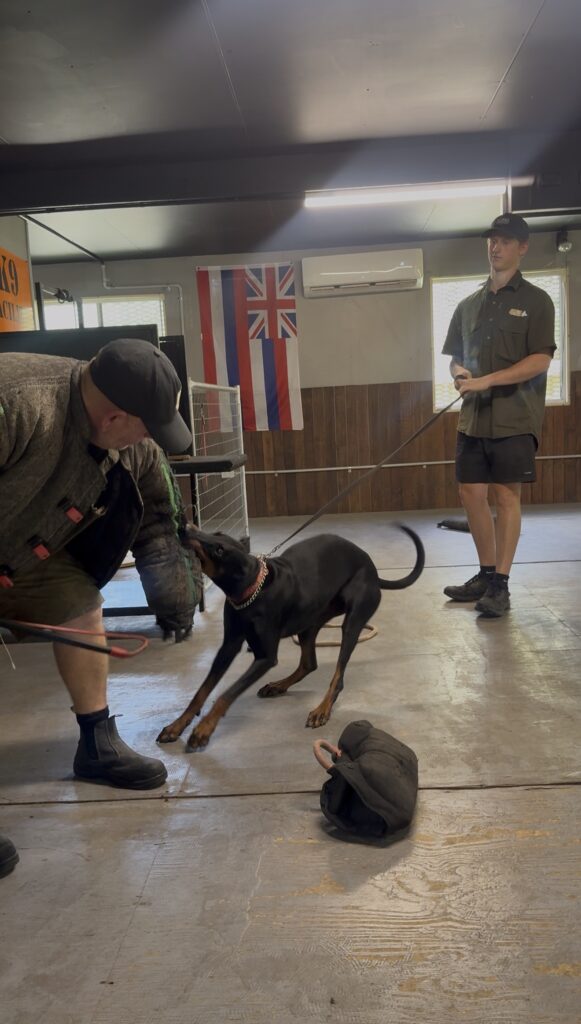
Decoy Work: Even I Got Trained!
At the very end of the session, Justin brought out Raven — a dog who he is currently working on dealing with multiple targets — to demo a control and redirection drill. Paula stood in one corner, Jamie another, and I was in the third.
Raven was sent to me first — full speed, full commitment. Raven was allowed to have impact with the decoy and sleeve but then Justin recalled her and redirected her to the next decoy, then again to the next after doing the same thing. Three decoys. Three different targets. Three correct decisions.
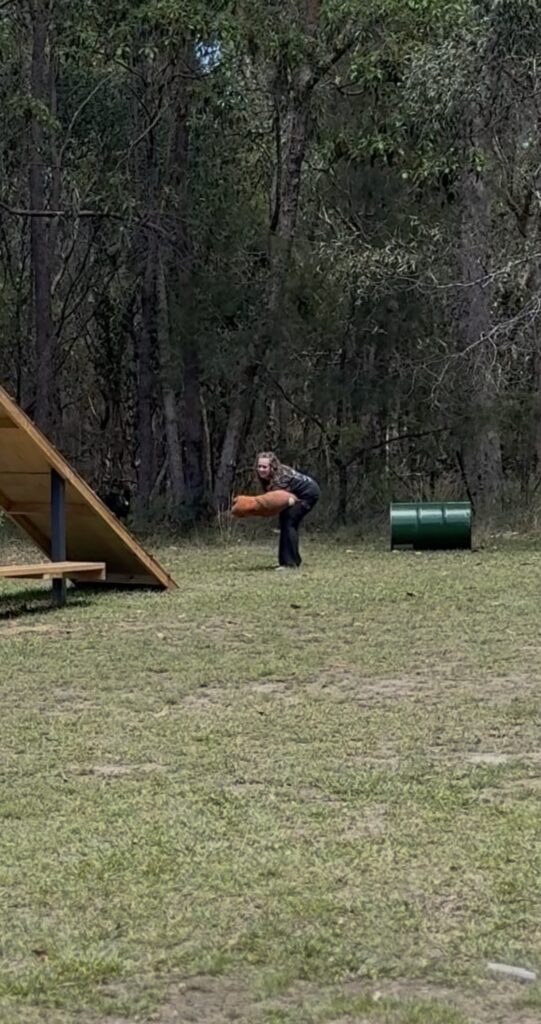
Watching that dog change direction mid-drive without frustration or confusion was one of the clearest demonstrations of clarity under pressure I’ve ever seen.
Jett’s trainer said, “That’s where Jett’s heading. It’s not just about bite. It’s about choice.”
That line has been sitting with me since.
Handler Headspace: I Didn’t Realise I’d Changed Too
What surprised me most about coming back after weeks off wasn’t just how Jett would respond — it was how I did.
I felt different on the field. Calmer. Clearer. Less frantic. I wasn’t bracing for mistakes or thinking about how it looked. I wasn’t trying to control every detail or micromanage her leash. I was actually present.
The break forced me to step back and stop obsessing over what she “should” be doing by now. Instead, I found myself more interested in what she was actually showing me in each moment.
It made me realise that time away from the field doesn’t just reset the dog — it can reset the handler too. The more I relax into the work, the clearer she becomes.
And honestly, that’s as much a training win as anything we did with sleeves.
Handler Notes (Before I Forget)
• Dogs don’t “forget” training — they just lose picture sharpness
• You can’t rush clarity — but you can rebuild it piece by piece
• Sometimes dogs don’t need more drive — they need more direction
• Drive building isn’t hyping the dog — it’s helping them choose correctly
• Calmness is a training tool, not just a personality trait
• Choice under pressure is the real end goal of control work
Final Thoughts
I walked in expecting to help Jett “switch back on.” But as always, she taught me something instead:
She didn’t need more energy. She needed a clearer picture.
And that goes for both ends of the leash.
If you want more raw, real-world insights from field training (the messy parts, not just the wins) — join my Stormforge Monthly newsletter. It’s where I keep the honest stuff.
Leave a Reply