Doberman drive is more than a temperament trait—it’s the engine behind the breed’s power, clarity, and emotional depth.
There are many breeds that work hard, many that love deeply, and many that thrive when partnered with a committed handler. You can’t understand the modern working Doberman without understanding Doberman drive, because it shapes how the dog thinks, commits, and recovers under pressure.
But the Doberman is one of the few that brings all three together in a way that feels almost paradoxical—equal parts intensity and sensitivity, discipline and chaos, work ethic and softness.
They move through the world with a kind of duality that makes them unmistakably Doberman: a dog bred for sharpness and courage, yet anchored by a loyalty that borders on devotion.
People call them sharp, powerful, intimidating, high-drive, reactive, brilliant, stubborn, emotional.
And the truth is they can be all of those things.
But underneath the labels is the simple reality that makes the Doberman so compelling: they are balanced by nature, when bred and raised well.
A Doberman’s heart and drive fuel one another. When handlers talk about Doberman drive, they’re often referring to how quickly the dog switches between prey, defense, and clarity without losing emotional balance.
The more connected they feel, the harder they work.
The more they trust their handler, the more precise their power becomes.
This is why the Doberman is the ultimate balance of heart and drive—not because they’re easy, but because their dual nature creates a partnership that is unlike anything else.
Table of Contents
The Origin of Duality
To understand why Dobermans carry this unique combination, you have to look at their purpose.
Louis Dobermann created the breed to be a personal protector—steady, courageous, intelligent, and deeply bonded to one person.
Their early design required a dog who could switch between states effortlessly: work mode, social mode, environmental awareness, and emotional engagement with their handler.
Unlike many working breeds that were developed for tasks independent of humans—herding, scenting, pulling, hunting—the Doberman’s entire job was built around a human partnership.
Their purpose wasn’t simply to perform; it was to connect, assess, decide, and protect in ways that required both judgment and sensitivity.
That duality didn’t disappear. Today’s balanced Doberman still carries:
• the nerve to stand firm in pressure
• the heart to seek connection
• the drive to work with power
• the sensitivity to read micro-signals from their handler
It’s this pairing—drive with sensitivity—that makes the breed so special and, for many people, so challenging.
Drive With an Emotional Core
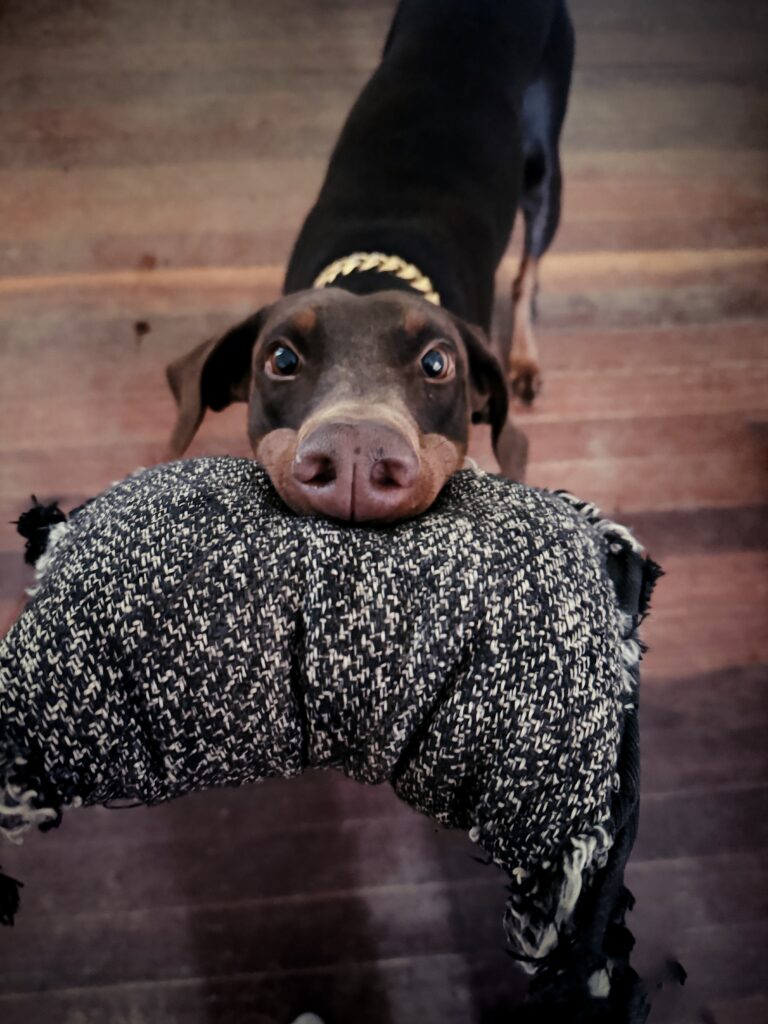
Dobermans don’t work because they must; they work because they care. One of the reasons the breed stands apart is that Doberman drive comes packaged with an unusually high level of handler-orientation and loyalty.
Their drive is relational. When they trust you, everything sharpens. When they don’t, everything scatters.
A balanced Doberman shows drive that is:
• purposeful rather than frantic
• channeled rather than chaotic
• forward rather than sideways
• clear-headed even when aroused
But here’s the real secret: that clarity and purpose come from connection first, not training.
A Doberman’s best work is an expression of relationship. Their energy flows through the handler and back, creating a feedback loop that amplifies trust and precision.
This is why experienced Doberman handlers often say the breed “works for the relationship, not the reward.”
When Doberman drive is channelled correctly, the result is a dog that works with intensity but still carries a softness toward their person.
Food motivates them.
Toys drive them.
But connection anchors them.
Sensitivity Without Fragility
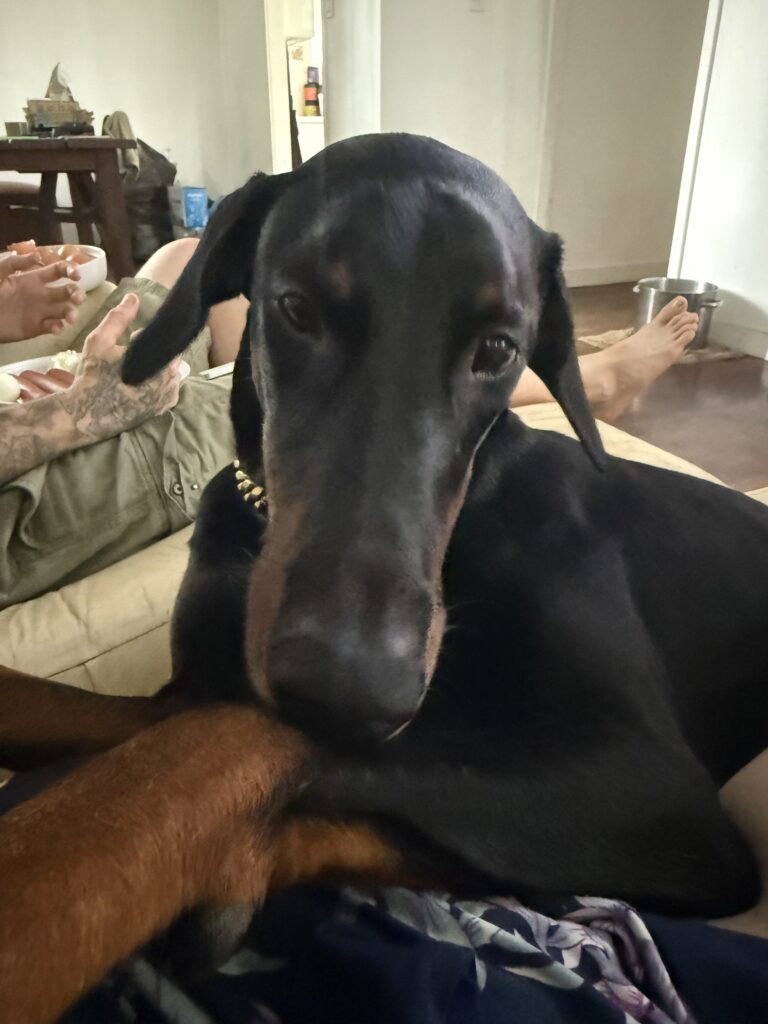
Dobermans feel everything—the tension in the lead, your breathing, the shift in your stance, the crack in your confidence. They are incredibly attuned to human energy, which is a gift and a responsibility.
Their sensitivity is not weakness. It is awareness.
A balanced Doberman reads the world with intensity. They notice inconsistencies, mismatches, and emotional pressure quickly.
When guided well, this sensitivity becomes intelligence.
When mishandled, it becomes reactivity.
This is where the “heart” side of the breed shows up most clearly. They’re emotionally available in a way many working breeds aren’t.
They want closeness, reassurance, rhythm, and predictability from their handler.
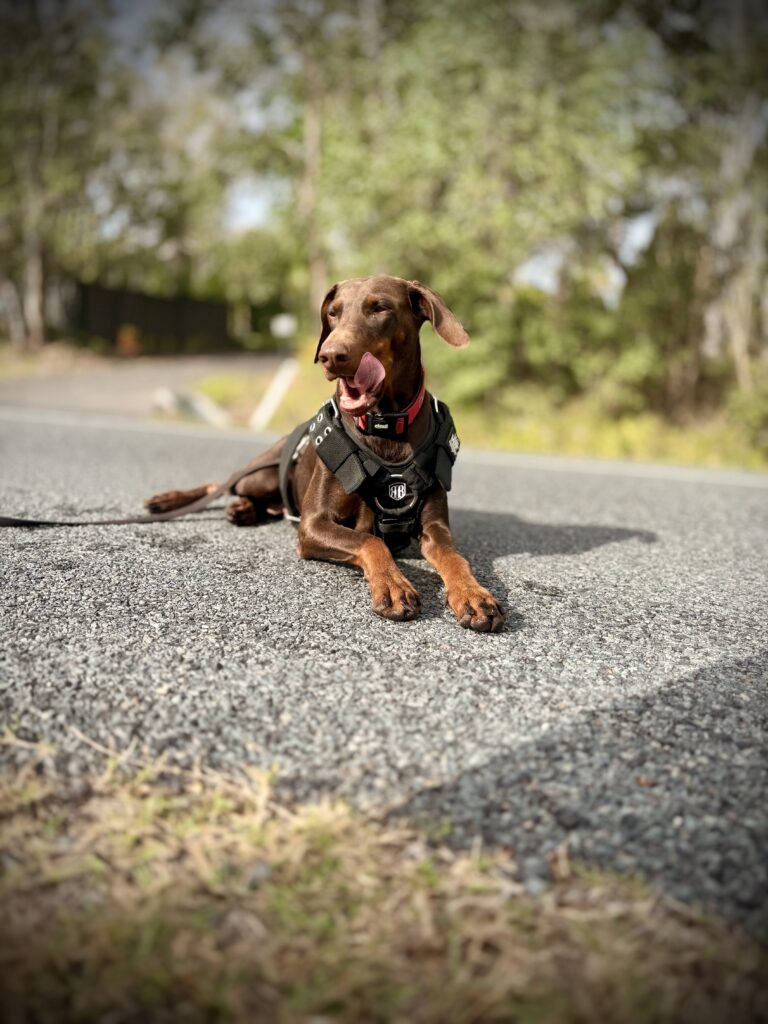
I see this every week in training—Doberman drive gives Jett her power, but her connection to me shapes how she uses it.
They thrive when the bond feels steady.
Their sensitivity gives them an ability that many breeds don’t possess: they can match their handler’s emotional state. Calm handler, calm dog. Sharp handler, sharp dog. Insecure handler, uncertain dog.
It’s not magic—it’s temperament, nerve strength, and relational wiring.
Power With Precision
When a Doberman is balanced, their working power becomes incredibly clean. Their movements sharpen. Their grip deepens. Their reactivity narrows. Their decision-making becomes faster but more controlled.
This is the moment handlers fall in love with the breed—not because the work looks impressive, but because they can feel the connection underneath it.
A Doberman in true working alignment is unmistakable:
• they launch with speed but land with purpose
• they bark with clarity, not panic
• they recover quickly, without carrying tension forward
• they show intent without drifting into conflict
The power is athletic and explosive, but it’s guided by trust.
Dobermans were never meant to be blunt-force dogs. Their strength is in refinement, not rawness.
This is where the balance of heart and drive aligns perfectly: their intensity becomes organised, not scattered.
The Bond Is the Blueprint
Dobermans thrive in environments where relationship is not an afterthought.
They want structure, clarity, consistency, and fairness—but most of all, they want connection.
Every handler learns this eventually: you can’t muscle your way through a Doberman’s confusion, frustration, or fear. You have to meet them where they are, then guide them where you want them to go.
They don’t respond to pressure without clarity. They don’t respond to commands without trust. They don’t respond to dominance without reason.
A Doberman doesn’t just join your life; they study it. They study you. They memorise your tone, your patterns, your routines, your emotions.
This is why they feel so different from other working breeds. They don’t simply attach—they attune.
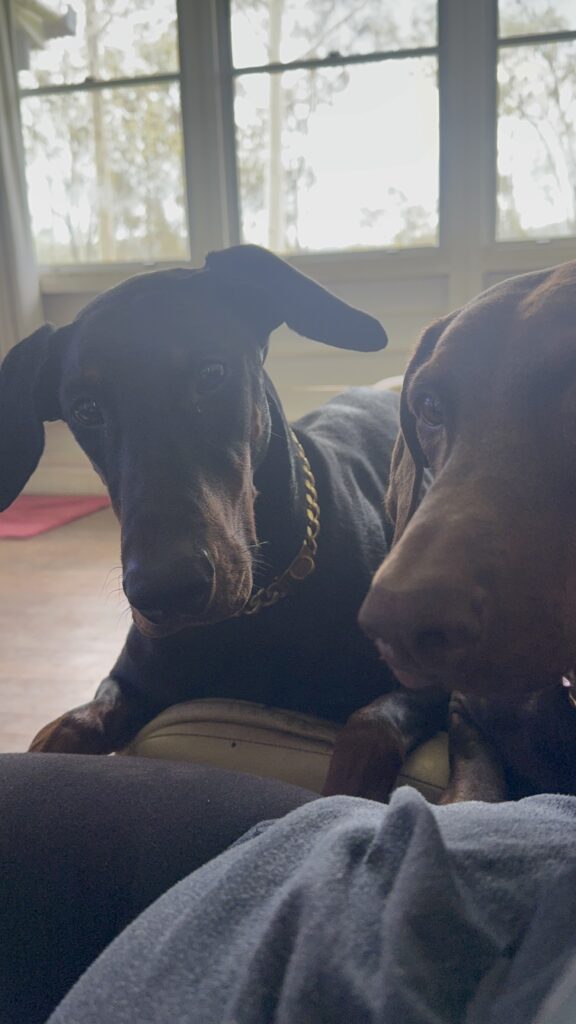
A balanced Doberman offers:
• loyalty without dependency
• drive without chaos
• intelligence without defiance
• emotion without volatility
It’s an uncommon blend, and when you feel it, you understand immediately why the breed inspires such devotion.
The Handler’s Role in Maintaining Balance
A Doberman’s balance is rarely accidental. It’s built through daily interactions, not just formal training sessions. The handler sets the tone—emotionally, structurally, and energetically.
To maintain balance, a Doberman needs:
1. Clear expectations
They thrive when the rules aren’t changing day to day.
2. Consistent feedback
Not harsh corrections—consistent communication.
3. Emotional steadiness
A handler who doesn’t unravel under pressure.
4. Fair structure
Boundaries matched with warmth.
5. Work that challenges their mind and body
Drive with no direction creates anxiety.
6. Connection built outside training
Walking together with no agenda, decompressing, quiet presence.
A Doberman becomes balanced when the handler is balanced. It really is that simple—and that difficult.
Heart as a Training Tool
A lot of breeds work “for the job.” Some work for the reward.
Very few work for the relationship.
Dobermans do.
In protection work, Doberman drive determines how confidently a dog engages, how cleanly they grip, and how quickly they recover between drills.
Their heart is not separate from their drive; it fuels it.
This is why working with a Doberman often feels like a dialogue rather than a command structure. The handler isn’t just telling the dog what to do—they’re negotiating confidence, intention, and clarity through each repetition.
This emotional investment can feel intense.
The breed doesn’t let you stay half-present. You’re either there with them or you’re not.
And when you are, the work becomes more than obedience or protection—it becomes synchronisation.
The Beauty of Their Complexity
Dobermans are not a beginner breed.
They’re not easy. They’re not passive. They are complex, emotional, powerful, sensitive, thoughtful, reactive, perceptive, and deeply relational.
And all of that complexity is exactly what makes them so extraordinary.
Good breeders understand that Doberman drive isn’t created in training; it’s inherited and then moulded through early development.
A Doberman gives you their whole heart and their whole drive. They don’t hold anything back. They show up fully—emotionally, physically, and mentally. That intensity requires a handler who can match it with steadiness, clarity, and connection.
But when everything aligns—when their heart and drive sit perfectly balanced—the partnership becomes something rare. Something that feels less like dog ownership and more like a shared purpose.
Final Thoughts
When people ask what makes the breed so unique, the answer is simple: Doberman drive paired with emotional intelligence creates a working dog unlike any other.
The Doberman is the ultimate balance of heart and drive because the breed was designed that way. Their power is matched by connection. Their intensity is matched by sensitivity. Their work ethic is matched by loyalty.
They are not simply working dogs. They are relational athletes. Emotional thinkers. High-drive partners with a softness they share only with the people they trust.
For the right handler—the one who values connection as much as capability—the Doberman offers a level of partnership that can’t be replicated. They demand presence. They demand awareness. But they also offer everything in return.
And when the balance is right, you realise something very simple and very true:
no other breed works with you quite the way a Doberman does.
Leave a Reply