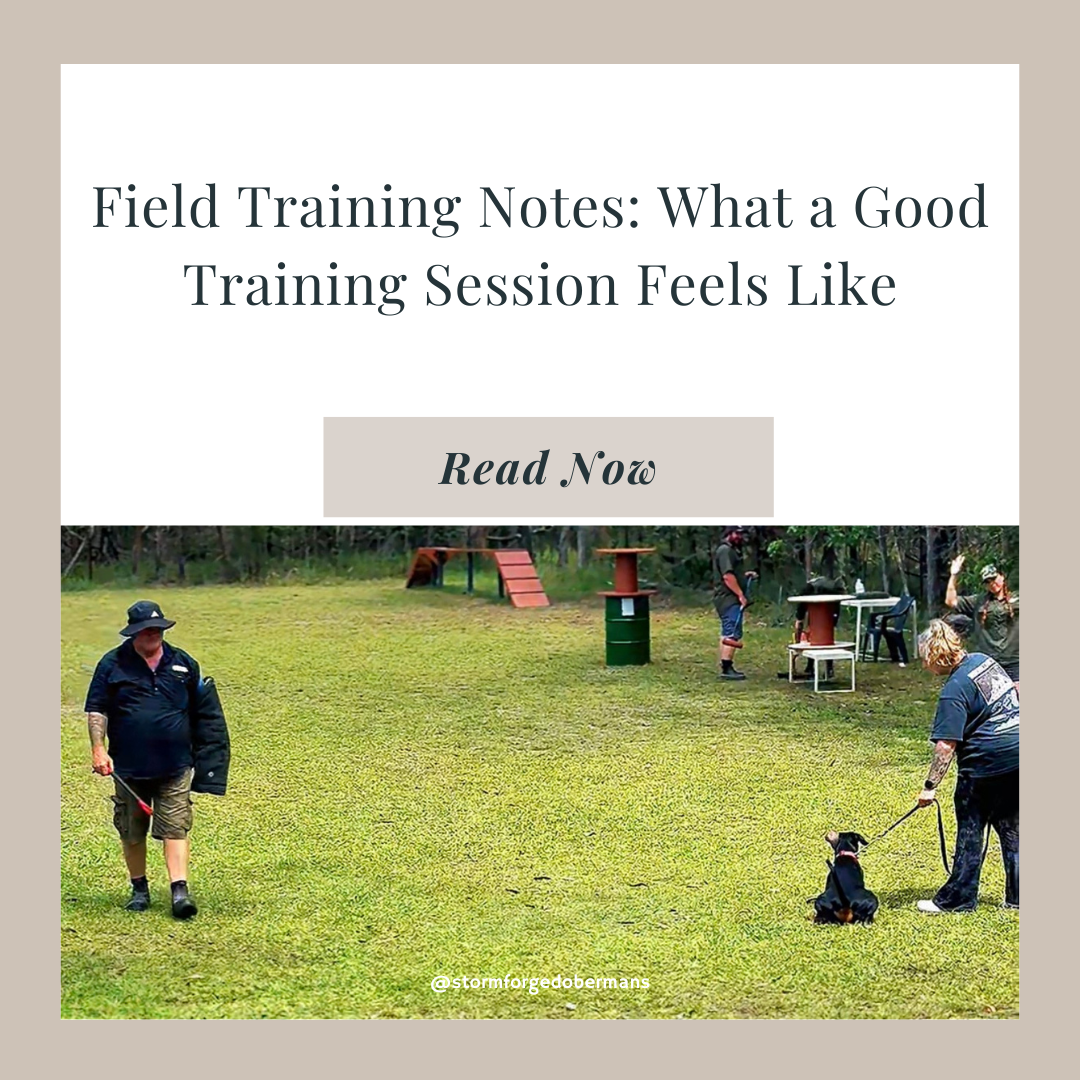
Some doberman training sessions are memorable because everything goes wrong. Others stand out because something finally clicks. This one sat firmly in the second category.
Not because it was perfect or polished, but because it felt clear.
The kind of session where you walk off the field feeling grounded rather than overwhelmed, and where the dog finishes engaged instead of flat or overstimulated.
I’m still learning. She’s still learning. But this session gave me a much clearer sense of what a good training day actually feels like when things are moving in the right direction.
Table of Contents
Starting With Obstacles: Building Confidence Early in Doberman Training Sessions
The purpose of the obstacle course, in general, is to give the dog a physical job to work through before anything more complex is layered in. It asks them to move their body with intention, commit to something in front of them, and stay present rather than rushing ahead mentally.
For Jett, starting this way seems to help her settle into the session. It gives her something clear and familiar to do before we introduce pressure, distance, or decision-making later on. By the time we moved into the rest of the work, she felt switched on without being frantic, which made everything that followed feel steadier for both of us.
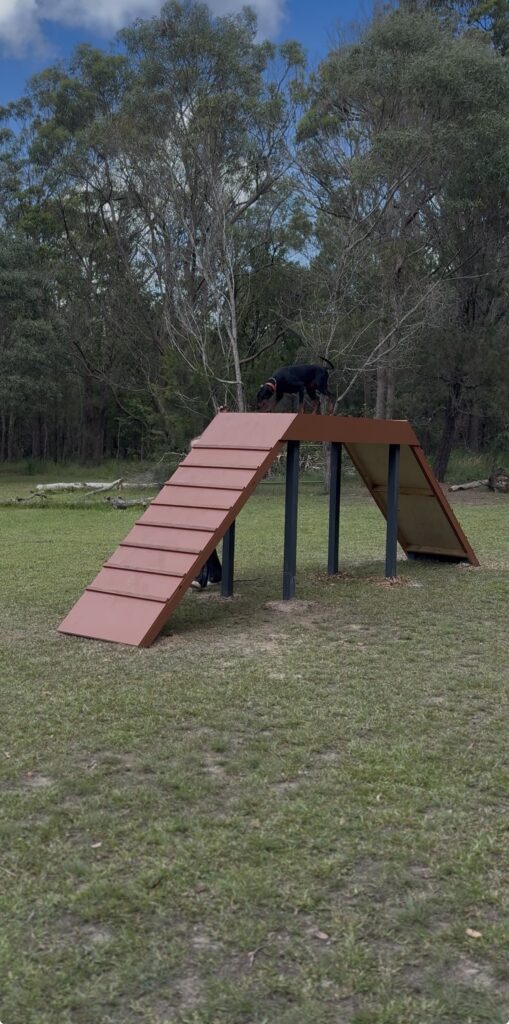
This session, Jett went over the tall A-frame for the first time, something she hasn’t done yet. I focused on introducing her to the smaller one first to gain confidence, and then tackled a new medium-height A-frame she hadn’t done before. She took both confidently.
What I liked most wasn’t just that she completed them, but how she approached them. There was no rushing, no hesitation, no checking out. She assessed, committed, and followed through. That kind of calm confidence early in a session matters. It tells me her head is in the work and that she’s comfortable enough to focus instead of bracing herself.
Starting this way felt grounding for both of us. It gave her a win straight away and gave me confidence heading into the more technical parts of the session.
Down in Motion: Thinking Without Disconnecting
We spent a lot of time working on down in motion, both on the short line and the long line. This has been an ongoing focus for us, and the progress is there. She understands what’s being asked. She never disobeys. But there’s still that moment where you can see her thinking and so her down in motion isn’t super fast.
It isn’t meant to be fast at this point, as speed will come eventually. I remember my olympic weightlifting coach saying, “slow is smooth, and smooth is fast”. This same analogy applies here. Practice the drill slowly to perfect each moment, then add speed when the moment is crisp and correct.
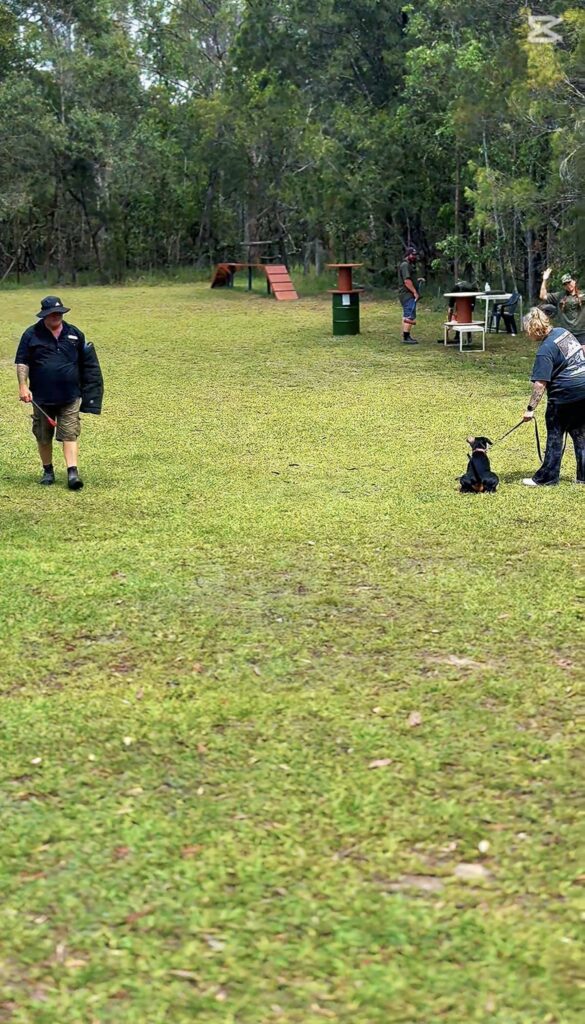
That moment doesn’t feel like resistance. It feels like processing. Her brain switches gears before her body commits, and while that makes the behaviour slightly sticky, it also tells me she’s actually understanding the task rather than reacting automatically. It’s her using her thinking brain and not just reacting to her drive.
The difference between short line and long line work was noticeable for me as a handler. On the short line, everything feels familiar and controlled. On the long line, I feel less certain. I tend to want to walk back toward her, close the distance, and regain that sense of control, even when she doesn’t actually need it.
That’s a handler issue, not a dog issue, and this session made that very clear. She held her downs just as reliably on the long line as she did on the short one. The work exposed where my confidence still needs building, which is uncomfortable but useful.
Control in Drive: Staying Connected Under Pressure
Throughout the session, we kept layering control into drive. She was activated, but asked to down or hold position before being released again. This is where things felt particularly clean.
The purpose of control in drive, at its simplest, is to teach the dog that engagement doesn’t disappear just because they’re asked to pause or regulate.
The work isn’t about switching her off or flattening her energy — it’s about showing her that she can stay connected, think, and respond while still wanting the work.
For Jett, this feels especially important right now. She has plenty of drive, but she’s also thinking more as she matures. Asking her to hold control inside that excitement is helping her understand that regulation isn’t a dead end — it’s just part of the conversation.
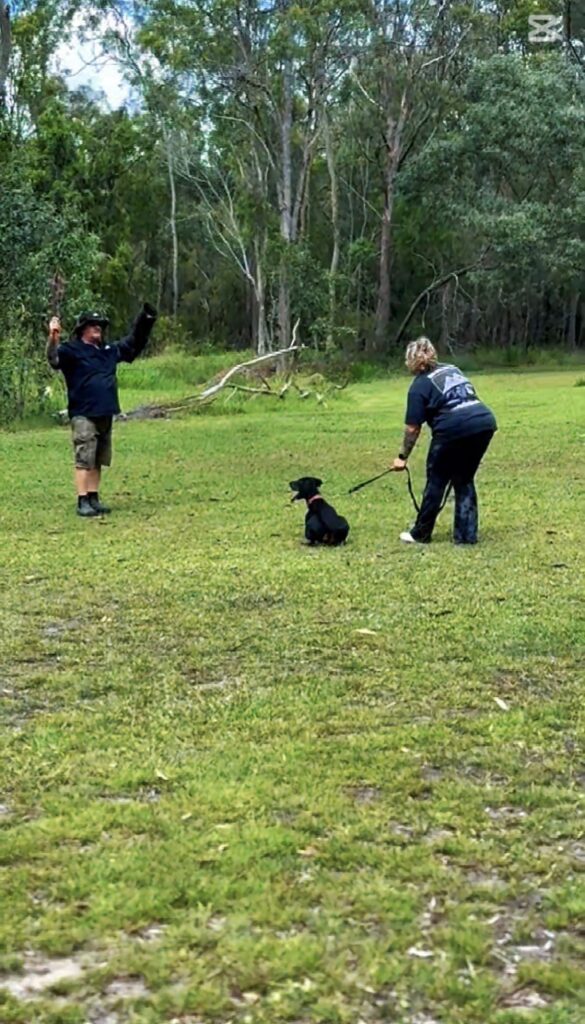
She stayed engaged without leaking energy. She didn’t get frantic or noisy. She didn’t disconnect. She held herself together in the work and stayed mentally present. It also showed her that she still won at the end. Just because I asked her to down or recall to heel didn’t mean she wasn’t ever going to get the reward, which in this case was the bite.
What stood out most was her engagement with me. She was actively looking up, checking in, waiting for information. Not in an insecure way, but in a collaborative one. She wanted to know if she’d done the right thing, and she wanted to know what came next.
Something has shifted in our connection recently. It might be maturity. It might be my handling improving. It’s probably a mix of both. Whatever it is, it’s changed how the work feels.
I wasn’t managing her through the drills. We were working together.
Introducing a Second Decoy: New Energy, Same Clarity
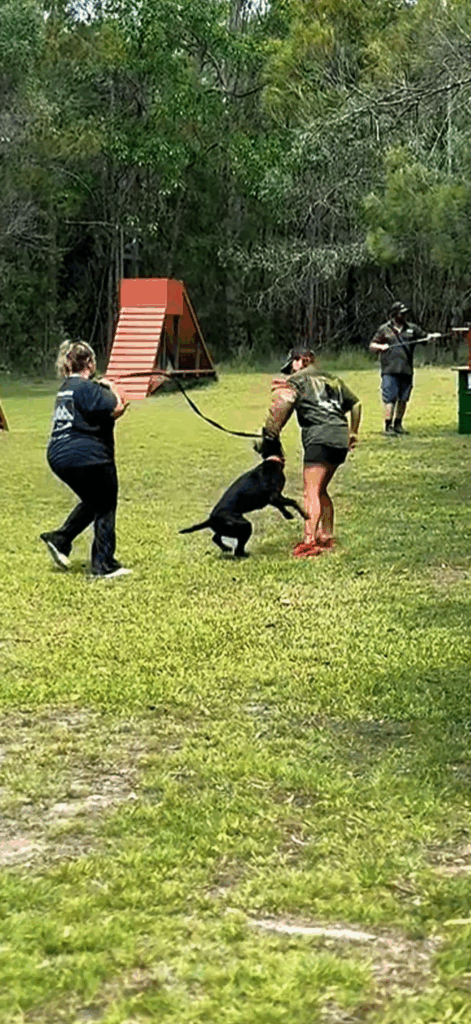
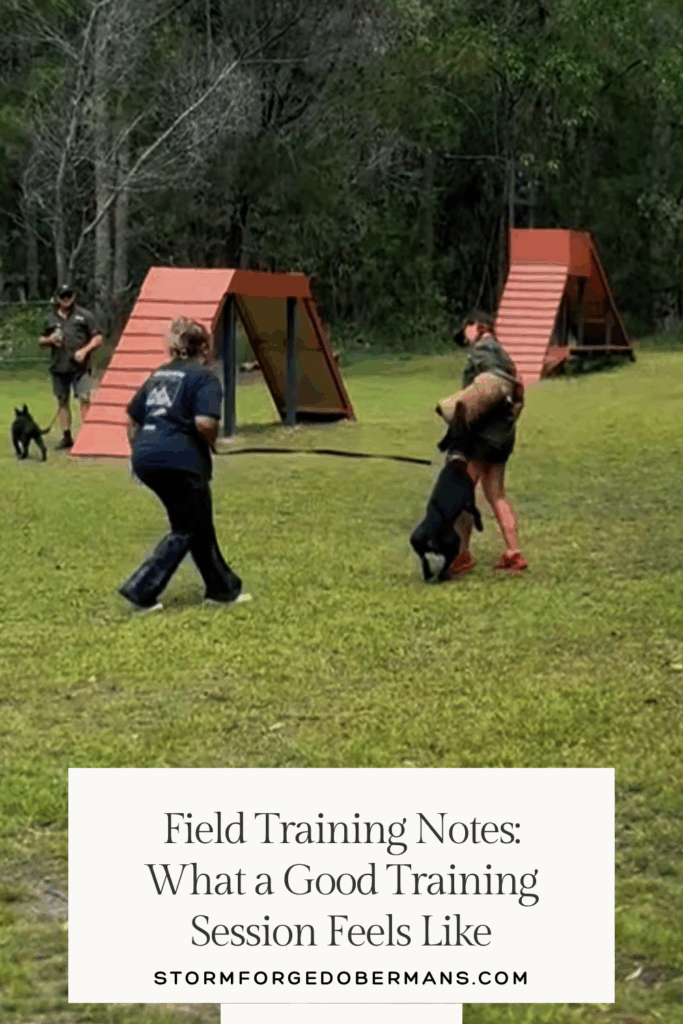
We introduced a second decoy during this session, and she absolutely loved it. It was new, exciting, and added a layer of pressure and interest that she responded to immediately.
The first time she clocked the second decoy, there was a brief pause. A very clear “wait, what?” moment. And then she was all in. She wanted her.
What impressed me was how quickly she adapted. She didn’t lose her head or spiral into chaos. She processed the change and committed fully. Even in the heat, she stayed assertive and forward without losing clarity.
The second decoy brought out that explosive engagement I’ve been waiting to see again, but it didn’t come at the cost of control. That balance felt like a really positive sign.
What introducing a second decoy actually does (without theory overload)
Long story short:
a second decoy tests whether the dog is thinking or just running a picture they’ve memorised.
With one decoy, a dog can start to:
- lock onto a single target
- anticipate where the work will come from
- go on autopilot
- rely on habit instead of information
Adding a second decoy:
- breaks the pattern
- adds uncertainty
- forces the dog to process new information
- tests clarity, not just drive
It shows whether the dog can:
- stay engaged with the handler
- switch focus without losing intensity
- remain clear under changing pressure
- regulate arousal when the picture shifts
For a dog like Jett — who is maturing and thinking more — this is especially important. It keeps the work honest. It prevents her from rehearsing a single predictable scenario and instead asks her to stay mentally flexible.
Importantly, it’s not about making the work harder for the sake of it. It’s about seeing whether the foundations hold when the picture changes.
Engagement, Connection, and Confidence
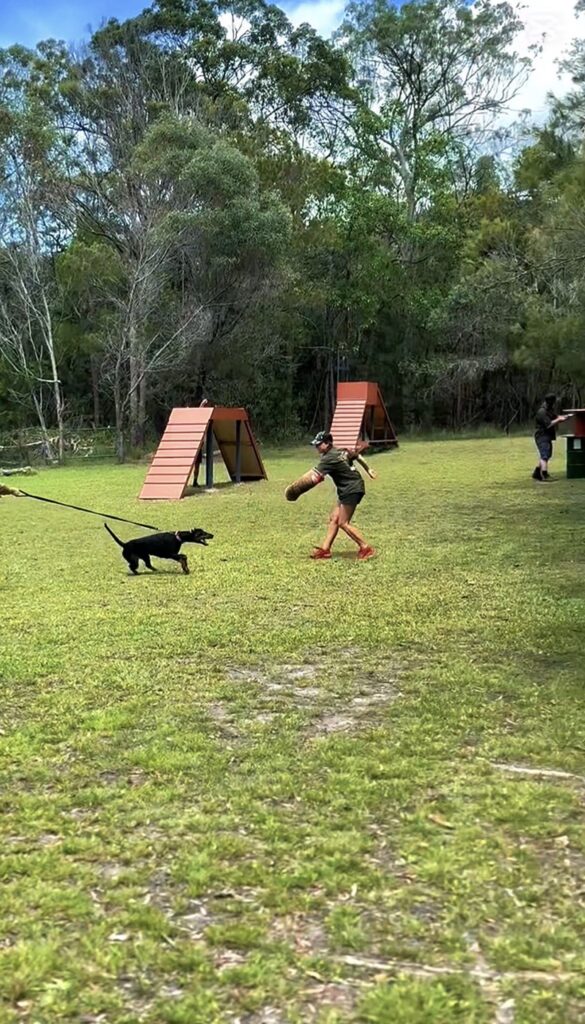
Throughout the session, her engagement with me stayed consistent. She wasn’t scanning the environment or anticipating on her own. She was watching me. Seeking confirmation. Waiting for direction.
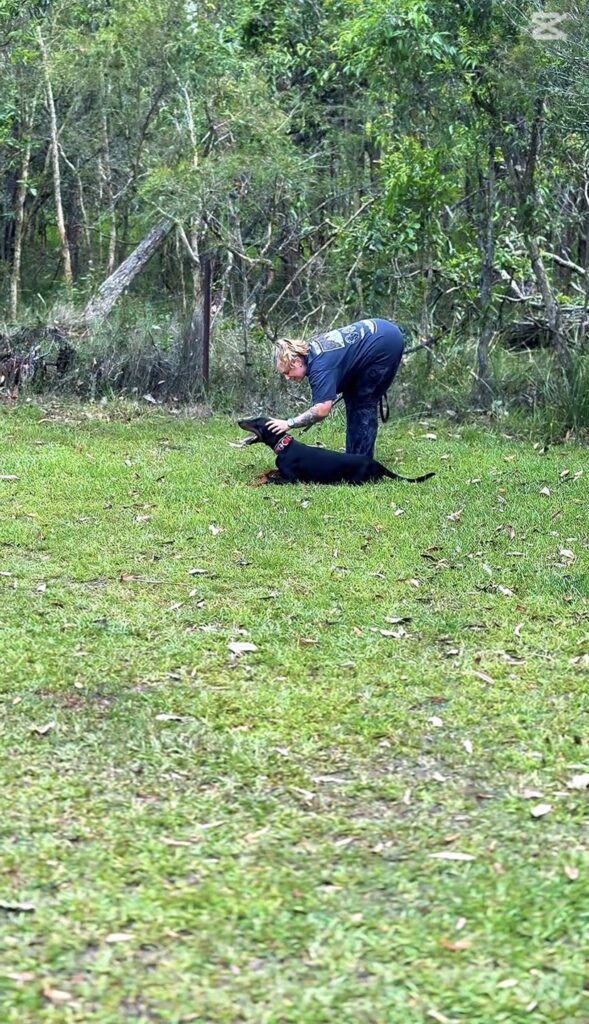
There was a moment where she dropped into her down exactly as instructed, and you could see it land for her. She realised she did what was asked, and that made her happy. Then she saw it made us happy, which made her even happier. It was simple, but it mattered.
For me, this session felt like a confidence shift. I wasn’t second-guessing every step or feeling behind the exercise. I understood what we were doing and why. The long line still challenges me, but instead of feeling like a failure, it just highlighted where I need more practice.
That distinction matters. Feeling capable doesn’t mean feeling perfect. It means feeling present.
What Changed for Both of Us
Everything went well in this session, not because it was easy, but because it was clear. She was switched on, assertive, and explosive when asked. I felt grounded and confident enough to let the work unfold without constantly trying to control the picture.
She handled new obstacles, new pressure, and a second decoy without disconnecting. I handled the session without feeling overwhelmed. That combination made the difference.
Introducing the second decoy highlighted that shift really clearly. The moment the picture changed, she noticed. She didn’t explode or shut down. She paused, took the information in, and then committed. That felt important. It showed me she isn’t just running a memorised routine anymore. She’s actually processing what’s in front of her.
For me, that moment mirrored what I was working through as a handler. The long line still makes me uncomfortable. I feel that urge to close the distance, to step back into what feels safe and familiar. But watching her stay clear at a distance forced me to recognise that the control I was missing wasn’t hers — it was mine. She didn’t need me closer. She needed me clearer.
The connection between us felt different as a result. She was actively looking to me for confirmation, not because she was unsure, but because she was engaged. She wanted to know if she’d done the right thing, and she wanted the next piece of information. That kind of check-in feels like a real shift from earlier sessions where she was more likely to push forward independently.
By the end of the session, neither of us felt fried or overwhelmed. She wasn’t buzzing, and I wasn’t mentally exhausted. We finished engaged, clear, and confident enough to come back and build on the work rather than recover from it. That’s the biggest change for me. A good session doesn’t have to be loud or intense. It just has to make sense — for both of us.
Final Thoughts
I’m still learning what good training feels like. I feel like I had to relearn everything I previously knew, so it wasn’t just a matter of learning protection stuff new, but also learning obedience stuff new.
I don’t have it all figured out, and I don’t pretend to. But this session gave me a clearer benchmark. Not for perfection, but for clarity, engagement, and connection.
We left the field switched on, not confused, not flat, and not overworked. She wasn’t buzzing, but she was clear. And right now, clarity feels like the most important thing we’re building.
If you want more Doberman posts like this — from puppy guidance and early foundations to working-dog training notes, handler reflections, breed education, and real-world case studies — join my Stormforge Monthly newsletter. It’s where I share the raw, behind-the-scenes lessons I don’t post anywhere else.
MORE Field Training Notes Posts:
Field Training Notes: Control in Drive and a New Level of Maturity
This week’s session was all about control in drive and seeing how Jett’s maturity is starting to show up in the work. Nothing dramatic, just small shifts in how she thinks and responds. We added a new obstacle, tightened up our handling, and layered obedience into the bite picture in a way that actually made…
Field Training Notes: When Drive Starts to Think
Since coming back after the break, I’ve noticed something shifting in Jett’s work. It isn’t low drive or shutdown, but something quieter and deeper. She’s starting to pause and think before she reacts, and sometimes that looks like hesitation or uncertainty. What I’m realising is that she isn’t losing drive – she’s asking better questions.…
Field Training Notes — Jett’s First Day Back After Seven Weeks Off
Seven weeks off the field — one heat cycle, one handler reset, and a dog who walked onto the training ground like she’d just come off vacation. What started as soft obedience and shallow barks slowly shifted into clarity, intention, and picture-building. This session wasn’t about firing her up — it was about showing her…
Leave a Reply