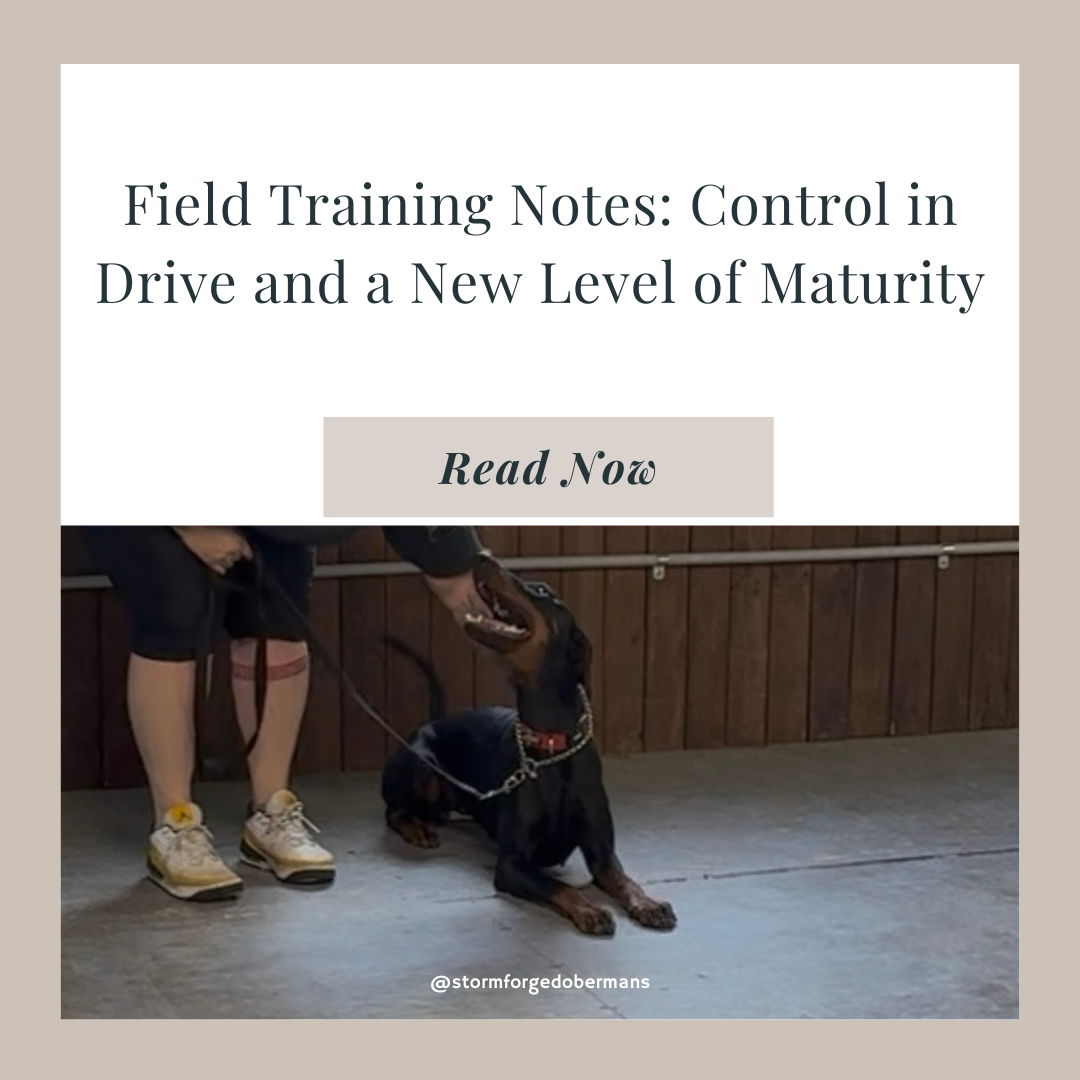
This week felt like another small shift in how Jett works.
Nothing dramatic, just the kind of change you only notice when you’re paying attention.
She’s quicker in the head, steadier in the body, and the work lands differently when she processes before she acts.
The session wasn’t loud, but it had that feeling of things starting to line up in a new way.
Table of Contents
Seeing the Change Before the Work Even Started
This week’s session felt like a shift — not in any dramatic way, but in that slow, steady way where you realise the dog in front of you isn’t the same one you had a few months ago.
The work looked familiar, but her responses didn’t feel the same. She’s quicker in the head now, more deliberate, and the gap between thinking and acting is getting shorter. It makes the session feel cleaner even when the drills are new.
We started on the obstacle course, which she’ hasn’t done in a while’s only done twice, and this time she was introduced to a moving barrel. She’s never seen it before, and her initial response was to pull back from it.
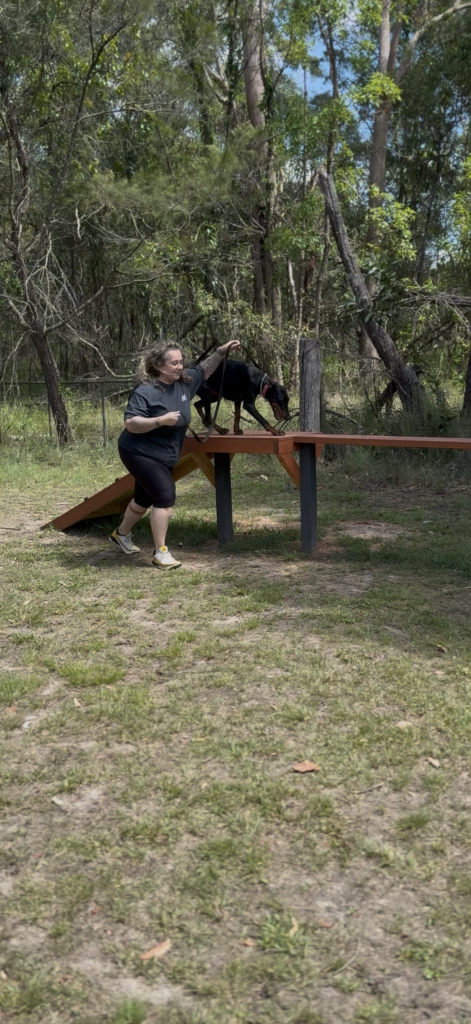
Instead of exploding into it or skirting around it, she just took a moment to look at it, then worked out how to put her feet where they needed to go, with a little bit of encouragement from me by helping her up and over.
No hesitation in a worrying sense. Just a dog who wants to understand what she’s stepping onto before she commits.
She used to try to power through everything. Now she wants the picture to make sense first. Once she got over the other side, let her paws touch the top and feel the slight movement when her body settled, she started to understand what it was and what I wanted from her.
We will keep working on that barrel in the next few weeks so she understands she doesn’t need to stand on it for long, but she will need to touch it and balance when she does before leaping off.
She got lots of praise and excitement when she made it over, so I know that next week she will already tackle it with much more confidence.
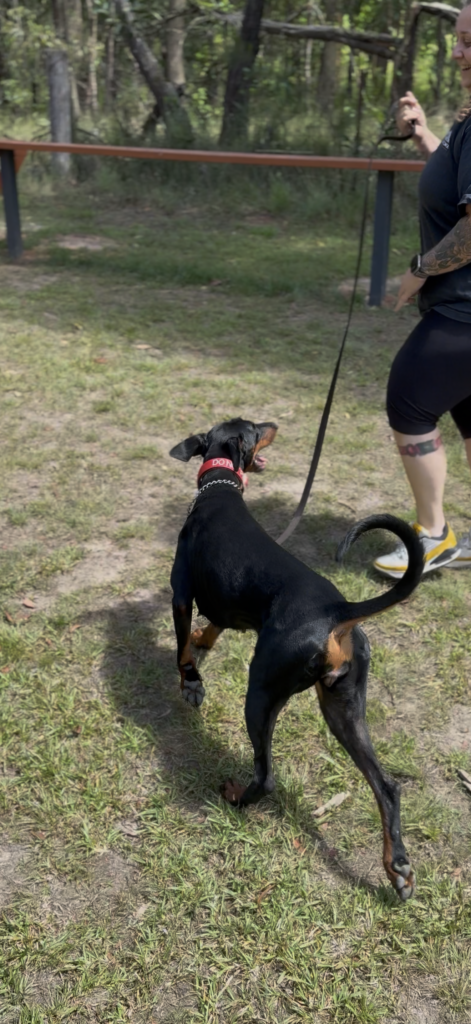
The Moving Barrel
The barrel itself wasn’t complicated. It rolls under the dog’s weight, which makes the footing unstable.
A younger version of her would’ve launched on top of it, slipped, and then tried to correct herself with speed instead of balance.
This version of her pauses, adjusts, and then climbs. It wasn’t perfect, but it didn’t need to be. It told me what her headspace is right now. Curious, but less chaotic than before. Working, but not flinging herself into things.
She’s transitioning out of the sloppy confidence stage and into something steadier.
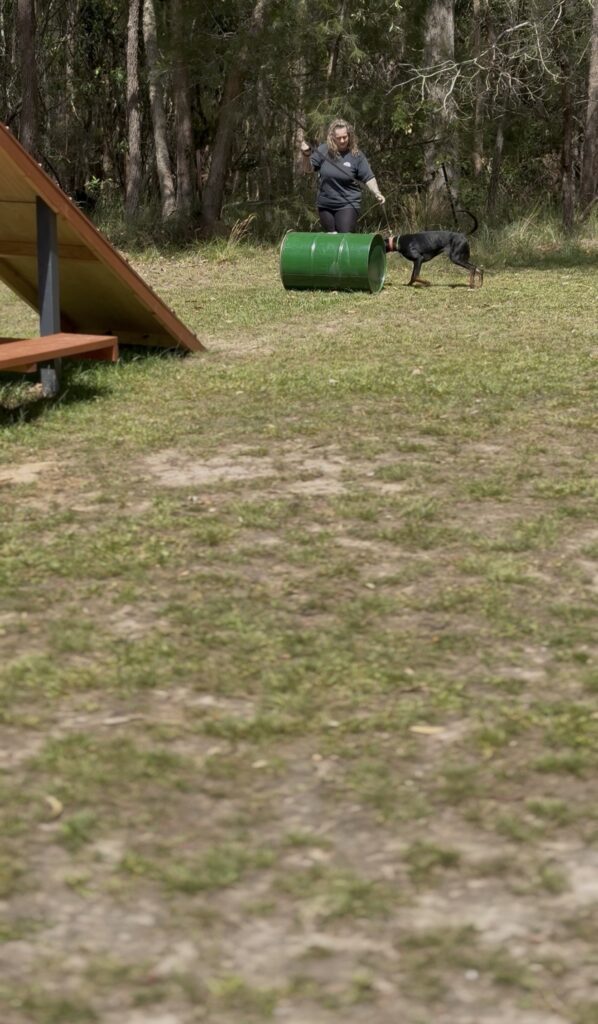
She didn’t get frustrated when she misplaced a foot or when it moved under her. She just kept trying to find where the stability was.
There was no noise, no whining, no leaking energy. That alone is a shift. She’s less dramatic in her problem-solving now. It’s a good sign.
Getting Ahead of the Drill
Before the bite work even started, our decoy spent time with me and another dog so I’d have the drill clear in my head. He walked me through the timing, how he’d signal, what he needed from me, and where the gaps usually appear for handlers.
That small pre-session walkthrough made the whole lesson feel more straightforward. It meant I went in without guessing, which meant she went in without guessing.
That’s the point of good decoy work — helping the handler not be the hole in the drill.
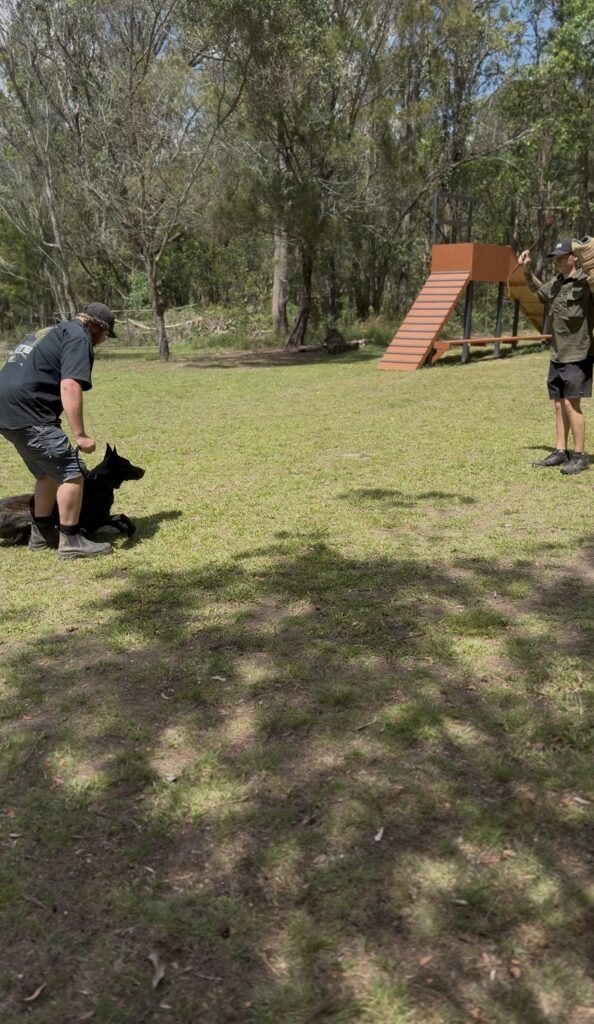
He also showed me a few small handling adjustments. Nothing dramatic, just tightening up the leash enough that it becomes information instead of decoration. A clearer line from me to her. A subtle encouragement for the bark. A more direct way of telling her where the picture starts.
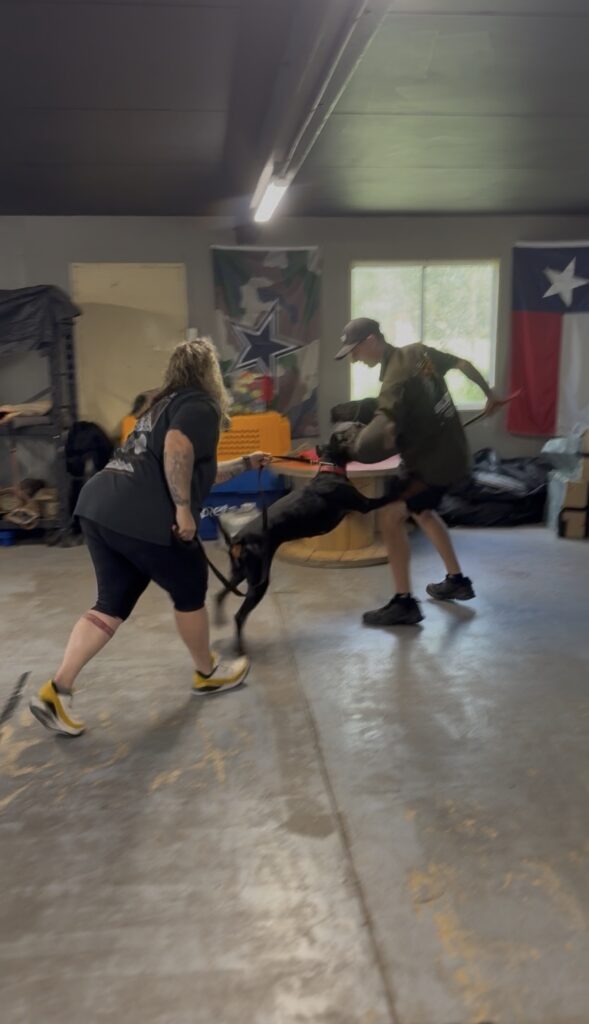
For bark and hold work, we let the lease slacken a little bit as she is supposed to learn that she doesn’t get to the end of the leash and then stops, but stops herself when she hits the space right in front of the decoy and the sleeve.
For this down in motion drill, we’re activating her bite command not her warning command, holding her taut to encourage the barking and build frustration, and then switching her out of that into a down or recall to heel before she finally gets the win of the bite.
It’s disruptive, frustrating, and builds drive and control at the same time.
Those things make a bigger difference than they look like from the outside.
Control in Drive
The main drill this week was control in drive. Nothing flashy on the surface, but it asks a lot from the dog.
She was given her activation to bite, but instead of launching, she had to down on cue from me, or recall to heel depending on what the decoy signaled.
She had to stay in the work even when the bite wasn’t immediately available.
A few months ago, this would’ve thrown her off. She’d either bark harder, try to self-correct the picture, or start guessing. Now she holds the moment without falling out of it.
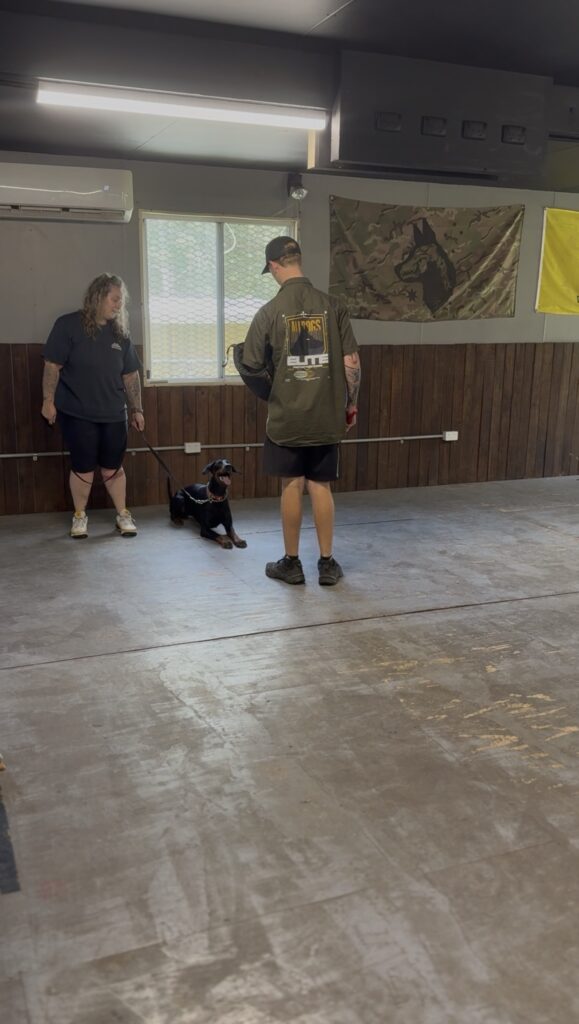
After the down or the recall, the decoy gave the release for the bite. So her job was to stay hot, stay present, and still take direction.
It’s a tricky balance for a young dog. Too much obedience can flatten them. Too much drive can make them ignore direction. This drill sits right in the middle, and you can tell exactly where the holes are if the dog starts to leak out either side.
Last week’s homework to prepare for this week was down in motion drills at home, which supported this week’s session more than I expected.
She took the down without dropping emotionally. She didn’t soften or drift. She didn’t look back at me for reassurance. She just went down, kept the picture in her head, and waited for the next cue. That’s new for her. She used to disconnect a little after downs, even if she didn’t look stressed. She’d just mentally step out for a second.
Not this time. She stayed plugged in.
Reading Her Working Headspace
Her thinking is quicker now. Not frantic. Not reactive. Just faster and more organised.
It feels like her brain clicked into a different gear after her heat. She used to hesitate because she wasn’t sure. Now she pauses because she’s processing.
Those look similar if you don’t know the dog. But they feel different when you handle them.
She’s sharper in some ways and quieter in others. Her bite entries aren’t explosive right now, but they’re cleaner. She’s not offering unnecessary movement. She’s not squeaking or leaking energy. She’s taking the picture as it comes instead of trying to create her own. That’s maturity, not flatness.
You can feel the difference in the leash. There’s less pull, but more commitment. She’s not dragging me toward the decoy, but she’s not hanging back either. She’s just right there with me.
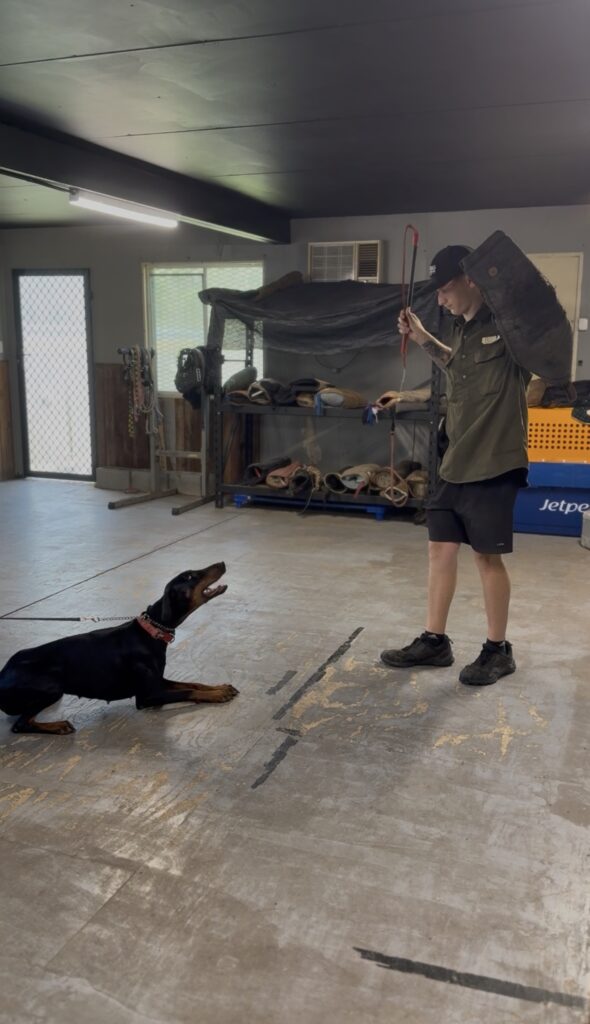
The Decoy Notes
We know as a Doberman that she’s hit the age where she’s matured a little bit and her thinking brain is starting to form. The decoy pointed it out last week, when we initially showed worry about her flatness. But it lines up exactly with what I’m seeing at home, and not just at her training sessions.
He didn’t have to say it — I could feel it — but hearing it confirmed what I’ve been noticing. She reacts to my cues faster now. She hears me sooner. She holds position with more intention instead of compliance. And when she bites…she gets mad. She bites fully, and with commitment.
He also noted that her bark quality changes based on how clear the picture is.
When she knows exactly what the drill is asking for, she barks with purpose. When she’s unsure, she barks with a different tone, more questioning.
It’s subtle, but it’s there. These little details matter with a thinking breed.
A New Tier of Maturity
Her maturity shift is obvious now.
Post-heat, she’s stepped into a different version of herself. Not softer — just more aware. Her brain is faster, her movements are more deliberate, and her ability to take pressure without emotional noise is stronger.
It’s not about big drive displays that are reactionary anymore. Her decisions are clearer. She’s sorting information a lot quicker. She’s not blasting through commands just to get to the reward. She’s actually listening — and not in a submissive way. In a committed way.
The difference shows up in the small things. When she sits, she doesn’t slam into it anymore. She just sits, directly, without drifting. When she recalls, she’s straighter. Not faster — straighter. That tells me more than speed ever will.
Holding Two Pictures at Once
This drill forced her to hold obedience and drive together without letting one crush the other.
It’s not an easy thing for a dog her age.
But she didn’t fold, and she didn’t get overexcited. She stayed in that middle space where the work is actually happening. That’s the part that matters.
Anyone can send a dog into a bite. Getting a dog to take a cue while activated and still stay mentally present — that’s the actual work.
She used to either go too hard or too soft. This week she held the shape the whole time. It felt like dealing with an older dog, not a young one still finding her feet.
Where This Leaves Us
This week wasn’t explosive, dramatic, or chaotic. It was steady and honest.
There was this one moment where she dropped into her down and you could just see it click for her. She realised she did exactly what was asked, and that made her happy. And then she saw it made us happy, which made her even happier.
It was a small thing, but it landed in the right way.
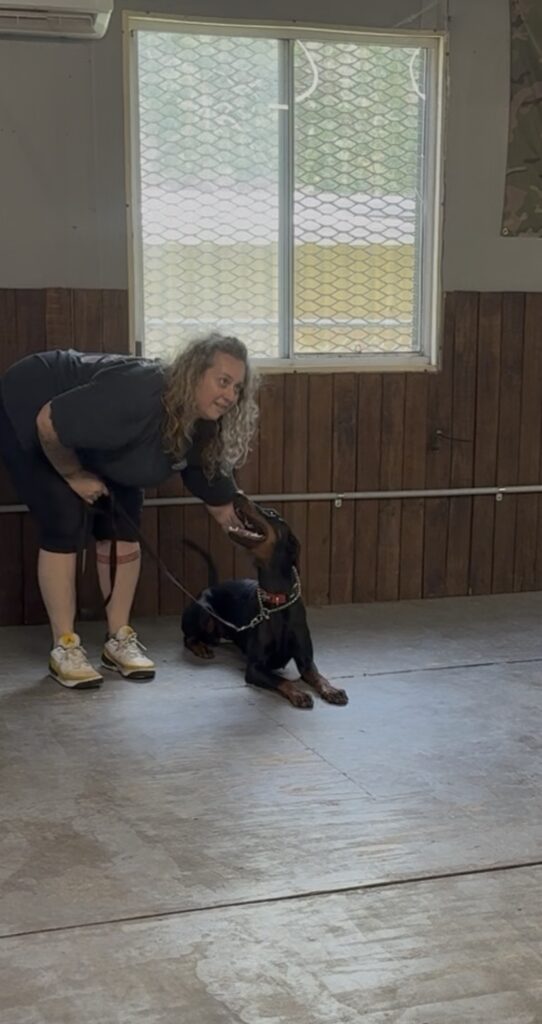
She showed me a version of herself that’s more capable than before, even though it doesn’t look louder.
She worked through the obstacle course without emotion spilling everywhere.
She was engaged, connected and happy when she was praised for her good work.
She took corrections with clarity, not confusion.
She stayed in the drill even when the bite was delayed.
And she let me handle her without pulling for control.
She’s maturing into a dog who can take direction without losing commitment.
That’s worth more than speed.
Final Thoughts
If I had to sum up this week, I’d say she’s not working bigger — she’s working smarter.
The loud parts have quietened down, and what’s left is a dog who can actually think inside the work. She still has the drive, but she’s not spending it all at once.
The moving barrel showed me she’s becoming deliberate.
The down in motion showed me she’s staying engaged.
The control-in-drive drill showed me she’s capable of holding two pictures at once.
This isn’t her peak. It’s just her next stage. And it’s a good one.
More Field Training Notes
Field Training Notes: When Drive Starts to Think
Since coming back after the break, I’ve noticed something shifting in Jett’s work. It isn’t low drive or shutdown, but something quieter and deeper. She’s starting to pause and think before she reacts, and sometimes that looks like hesitation or uncertainty. What I’m realising is that she isn’t losing drive – she’s asking better questions.…
Field Training Notes — Jett’s First Day Back After Seven Weeks Off
Seven weeks off the field — one heat cycle, one handler reset, and a dog who walked onto the training ground like she’d just come off vacation. What started as soft obedience and shallow barks slowly shifted into clarity, intention, and picture-building. This session wasn’t about firing her up — it was about showing her…
Leave a Reply