
Choosing between a male and female Doberman isn’t just about preference — it’s about fit. Both share the same core traits that make this breed so well-loved: loyalty, intelligence, protectiveness, and drive. But there are differences in energy, maturity, and temperament that can shape your experience as an owner.
If you’re trying to decide which gender is right for your household or goals, this breakdown will help you understand the practical differences — without the fluff. The male vs. female doberman question is one that requires an understanding of what you want your doberman for, and how each gender will impact those final goals.
Table of Contents
Physical Differences: Male vs. Female Doberman
Dobermans are athletic, powerful dogs no matter the sex, but there are clear distinctions between males and females when it comes to build and presence.
Size and Build
Males are larger, usually standing 66–71 cm tall and weighing 34–45 kg. They have thicker bone structure, more muscle mass, and an overall stronger physical presence. You’ll notice it in the way they move and in how they feel on leash — heavier, stronger, more imposing.
Females stand around 61–66 cm and weigh 27–41 kg. They’re slightly lighter, more agile, and easier to handle physically. They tend to look cleaner through the lines — still powerful, but not as bulky.
For protection or sport work, both can perform equally well. The main difference comes down to how you prefer to handle your dog — males bring more weight and physical power, while females tend to be a bit quicker and lighter on their feet.
Appearance and Expression
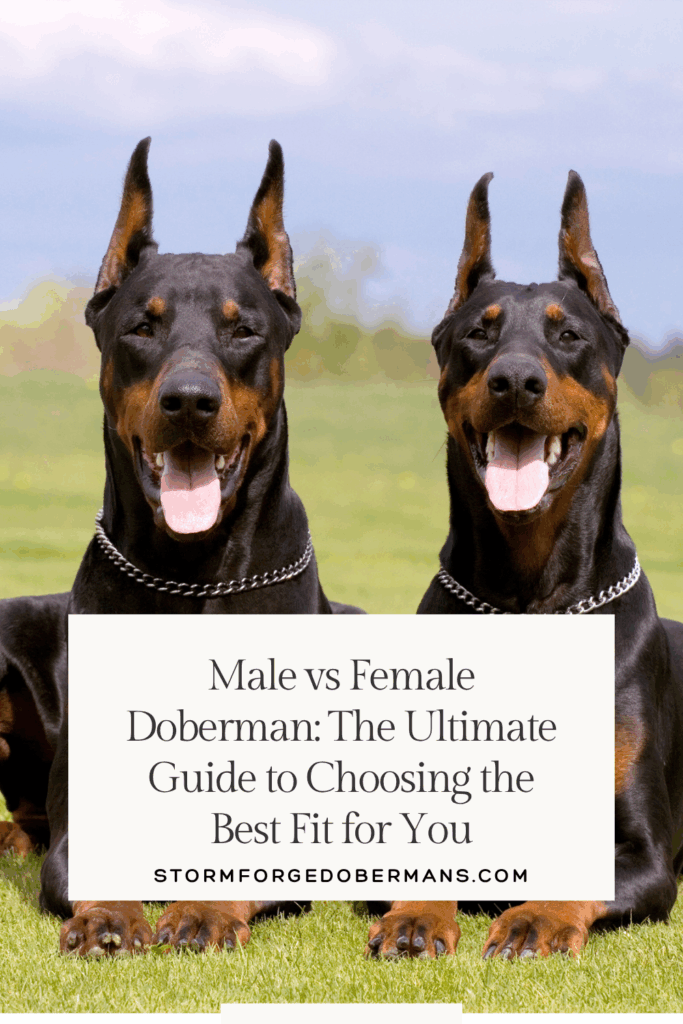
Both have that unmistakable Doberman look: sleek, athletic, and alert. Males generally have broader heads and thicker necks, which gives them that “classic” strong silhouette. Females tend to look a little more refined — elegant but still athletic.
Expression-wise, males often look bolder or more confident; females often seem more focused and deliberate. It’s subtle, but anyone who’s spent time around both will see the difference instantly.
Temperament and Behaviour
Temperament is where most owners will notice the biggest contrast. Both sexes are loyal, intelligent, and protective, but how they express it can vary quite a bit. But it also plays a huge role in the male vs. female doberman debate.
Males
Male Dobermans are usually described as more affectionate, playful, and attention-seeking. They tend to form very close bonds and often want to be right beside you — or on you — at all times. Many people joke that male Dobermans never quite grow up, and that’s not far from the truth.
They’re generally more open, social, and outwardly expressive. But along with that can come more pushy or dominant behaviours, especially as they mature. You’ll see this more around other males, during adolescence, or if leadership isn’t clear.
They benefit from early, consistent boundaries and structured training. When handled properly, they’re incredibly stable and confident. But if you’re inconsistent, they’ll notice and test you — not in a bad way, just part of who they are.
Females
Female Dobermans are usually described as more independent, mature, and intuitive. They tend to think before they act, which makes them easier to handle in many cases. Females mature faster mentally, focus better during training, and often develop steadier, more predictable behaviour early on.
They’re still affectionate and loyal, but in a different way — more selective, a bit more reserved, and not as over-the-top. Once you earn their trust, they bond just as deeply, but they’re less likely to constantly seek reassurance or affection.
Females also tend to be more protective of their home or family in a measured, thoughtful way. Where a male might posture loudly, a female will watch quietly and act only if needed.
Neither is “better,” but the difference is noticeable: males wear their emotions on their sleeve; females process and respond.
Training and Socialisation
Dobermans are smart — sometimes too smart. They’ll learn commands quickly, but they’ll also learn your patterns, tone, and what they can get away with. Both males and females thrive on clear, calm leadership, but how you train them should reflect their personality.
In our home, the male vs. female doberman debate is heavily skewed for females. They are a lot more bitchy, to put it nicely, but we’ve found they also learn a lot faster than the males and are instinctively more protective.
Training a Male Doberman
Males often need more repetition, structure, and clear expectations. They can be stubborn at times, especially during their teenage phase (around 8–18 months), when hormones kick in.
The best approach is calm consistency — firm boundaries, plenty of engagement, and clear direction. They respond best when training feels like a game or challenge, not a power struggle.
Socialisation is key. Expose males early to new environments, people, and other dogs so they learn how to assess situations calmly. It prevents reactivity later and helps them stay confident and clear-headed in all environments.
Training a Female Doberman
Females generally learn faster and hold focus longer, especially when they trust their handler. They pick up new skills easily and tend to be more precise and reliable once they’ve learned something.
That said, they can also be independent. If they understand the task and see no point in repeating it endlessly, they’ll check out. Vary the work, keep sessions purposeful, and you’ll get the best out of them.
Females respond exceptionally well to reward-based training and clarity — they like to know what’s expected, and they’ll meet you there every time.
Health and Longevity
The main breed-specific health issues — such as DCM (dilated cardiomyopathy) and hip dysplasia — affect both genders, but there are a few sex-related health differences worth knowing. This shouldn’t really impact your choice between a male vs. female doberman, but you certainly should have it in the back of your head when selecting a doberman.
Males
Intact males can be prone to prostate issues and testicular tumors as they age. Neutering can reduce these risks, though the timing should be discussed with a vet familiar with large breeds.
Neutering too early can affect growth plate development and muscle tone. Many breeders recommend waiting until 18–24 months so the dog can finish developing physically.
Behaviourally, intact males may mark more or be more dominant around other males. Training and management make a big difference here — a well-socialised male won’t be problematic.
Females
Females carry the risk of pyometra (a serious uterine infection) and mammary tumors, especially if left intact. Spaying prevents both but comes with its own timing considerations. Spaying too early can also impact joint health and coat texture, so again, talk to a vet who understands the breed.
Intact females will come into heat roughly twice a year, which needs to be managed responsibly. Spayed females are usually more stable hormonally and easier to manage long-term.
Energy Levels and Work Drive
Both male and female Dobermans are high-energy, working dogs that need physical and mental outlets. If you don’t provide it, they’ll make their own fun — and it won’t be the kind you want.
In the male vs. female doberman debate, we’ve personally found the energy levels and work drive relatively equal between sexes. The females tend to be a lot more bossy than our males.
Males
Males tend to have more outward energy — they push forward, love to play hard, and thrive on challenge. They need structured exercise and something to focus on, whether that’s obedience, tracking, scent work, or protection training.
When their energy is managed properly, they’re loyal, easy to live with, and great companions. But if they’re under-stimulated or left to their own devices, they’ll quickly turn that energy into destructive behaviour or push boundaries just to get a reaction.
Females
Females usually have a more balanced, contained energy. They still need plenty of exercise and mental engagement, but they tend to self-regulate better once mature.
Where males are often described as “big kids,” females usually settle faster and focus better during structured work. They can be just as driven in sport or protection, but they often bring more control and consistency to their work.
Living With a Male vs Female Doberman
In day-to-day life, the differences between male vs. female dobermans show up in small but noticeable ways. Males often follow you everywhere, always wanting to be part of whatever’s happening. They’re usually the ones leaning against you while you work, sitting on your foot while you cook, or trying to squeeze onto your lap even when they weigh 40 kilos.
Females are a little more independent. They’ll stay close, but they don’t usually need constant contact. They’ll often choose a spot nearby where they can watch you — close enough to feel included, but not underfoot.
Males usually do better living with females if you plan to have two Dobermans; same-sex pairs, especially two females, can be challenging without careful management. Females are more selective about other dogs and can be less tolerant of pushy energy, especially in maturity.
Feeding, grooming, and exercise needs are almost identical for both sexes. What really changes is the kind of presence they bring to your home. Males fill the space — they’re big, animated, and constantly involved. Females blend into it — calm, aware, and ready to step in when needed.
Which Is Right for You?
This comes down to your lifestyle, energy, and goals. Choosing a male vs. female doberman really ends up being subject to your goals and needs.
If you want a dog that’s affectionate, playful, and thrives on close, constant engagement, a male Doberman might suit you better. They’re big personalities — loyal, fun, and expressive. They’re often a great match for handlers who enjoy hands-on training and physical interaction.
If you want a partner who’s intuitive, mature, and steady, a female Doberman may be the better fit. They’re often easier to manage, quicker to mature, and more tuned in to subtle cues. They make excellent companions for families or handlers who prefer calm consistency.
If you’re looking at working, sport, or breeding, your choice may depend more on genetics, drive, and structure than gender alone. There are powerful females in sport, just as there are calm, family-suited males. What matters most is temperament and purpose.
Final Thoughts
At the end of the day, there’s no right or wrong choice — only the right match. Both male vs. female Dobermans can make incredible companions and working partners when raised and trained properly.
Males tend to bring more size, energy, and overt affection. Females bring focus, maturity, and balance. Both will give everything they have if you give them clarity, purpose, and connection.
So when deciding, think less about gender and more about energy compatibility. The question isn’t which is better — it’s which fits your life best.
Because once you build that trust and structure, it doesn’t matter if your Doberman is male or female — what you’ll have is one of the most loyal, intelligent, and capable breeds on earth.
Leave a Reply