
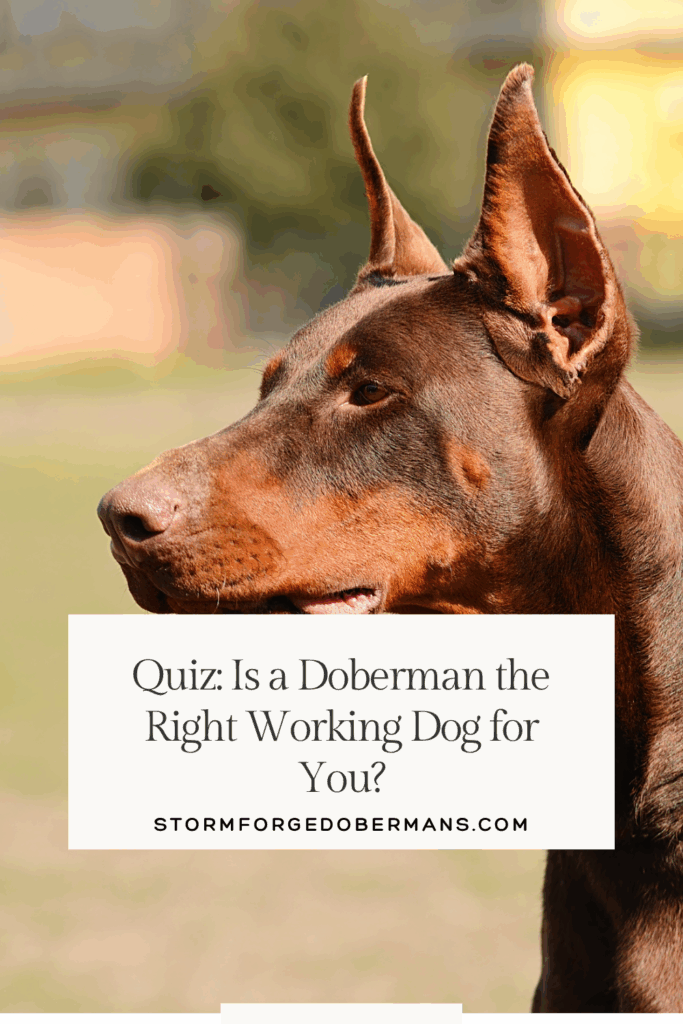
The Doberman isn’t just a breed — it’s a force of nature. Intelligent, loyal, athletic, and deeply intuitive, Dobermans have an unmatched ability to read human emotion and act with purpose.
But they’re not for everyone. These dogs need structure, leadership, and clear communication. They thrive when their owners understand what truly drives them — and that’s exactly what this quiz is designed to help you discover.
If you’ve ever wondered whether a Doberman is the right working dog for you, take this quiz and read along. It’s part reflection, part education, and part self-check. By the end, you’ll have a clearer sense of whether this breed aligns with your lifestyle, mindset, and goals.
Table of Contents
Understanding the Doberman’s Drives
Before you dive into the quiz, it helps to understand what makes a Doberman tick. At their core, they’re driven by a unique balance of prey drive, defense drive, and social drive.
- Prey drive fuels their excitement for chase, play, and engagement — this is what makes training fun.
- Defense drive is their natural instinct to protect, to stand firm when challenged, and to read energy around them.
- Social drive is their need to bond, to belong, and to please the person they trust.
The best Doberman working dogs carry all three, balanced and stable. When that balance is nurtured through clear leadership and consistent training, they become reliable, confident working dogs. When it’s ignored, they can become anxious, reactive, or unfulfilled. That’s why understanding your drives and temperament as a handler is just as important as understanding theirs.
1. Environment & Lifestyle Match
Dobermans are adaptable, but they don’t thrive on neglect. They need room — not just physical space, but space for engagement and purpose.
What type of environment do you live in?
A) Urban or suburban, with limited space.
B) Rural or large property with plenty of outdoor space.
C) Active lifestyle with frequent outdoor activities.
D) A setting that requires frequent interactions with the public.
Educational Insight:
While Dobermans can adjust to smaller homes or suburban living, it only works if you commit to structured exercise and mental enrichment. Think obedience, tracking, scent games, or daily structured walks with training elements. If you live rurally or lead an active lifestyle, the breed’s high energy and intelligence will feel natural to you. But without consistent outlet, a Doberman working dog in a confined space will often develop frustration, pacing, or reactivity.
2. Time, Training & Commitment
Owning a Doberman working dog means committing to their development. They don’t just want your time — they need your attention and engagement.
How much time can you dedicate to training and exercise?
A) I can manage a moderate amount of time for regular training and exercise.
B) I have ample time for intense training and daily physical activity.
C) I can provide consistent exercise and training, but not extremely intensive.
D) I prefer a breed that is relatively low-maintenance in terms of exercise needs.
Educational Insight:
Dobermans are thinking dogs. An hour of running isn’t as effective as 20 minutes of obedience or scent work. They crave purpose — not chaos, not boredom. Training a Doberman working dog can include focused heel work, tracking exercises, sport drills, or learning impulse control through structured play. If you love the process of working with your dog, a Doberman will rise to your level. If you’d rather have a more independent or low-maintenance breed, their constant desire to engage might feel overwhelming.
3. Experience & Handling Style
Dobermans are emotional mirrors. They reflect the energy and tone of the person holding the leash.
What is your experience level with dogs?
A) I’m relatively new to owning and training dogs.
B) I have experience with high-energy or working breeds.
C) I’m comfortable handling strong, driven dogs.
D) I prefer a more easy-going breed that forgives mistakes easily.
Educational Insight:
Doberman working dogs aren’t for beginners by default — but beginners with the right mindset can do exceptionally well. It’s not about force or dominance; it’s about calm, confident leadership. They respond best to fairness, structure, and emotional balance. If you can remain consistent and patient, even when challenged, you’ll earn their loyalty for life. But if your tone or energy fluctuates often, they’ll sense that uncertainty and reflect it back.
4. Purpose & Goals
Every Doberman working dog needs a job — and that “job” doesn’t have to mean military work. It could be obedience, protection, sport, or simply being an alert family guardian.
What is your primary purpose for having a working dog?
A) Personal protection or home security.
B) Search and rescue, sport, or police work.
C) Competitive obedience, scent work, or tracking.
D) Family companionship, therapy, or assistance work.
Educational Insight:
European Dobermans are typically bred for higher drive and workability, while American lines focus more on show conformation and temperament. There’s no right or wrong — just suitability. If you want a dog for IGP, PSA, or protection sports, you’ll need a European working-line Doberman with tested nerve and focus. If you want a loyal companion with moderate drive, an American-bred or lower-drive European might be perfect. Clarity about your purpose ensures you choose a breeder who aligns with your goals.
5. Social Temperament & Handler Connection
Dobermans are loyal to a fault. They form deep attachments and crave connection with their person — but that intensity can surprise people used to more detached breeds.
How important is a dog’s ability to interact with people in your role?
A) It’s important; I want a dog that protects but remains approachable.
B) Somewhat important; focus matters more than friendliness.
C) Balance is ideal — social yet serious when needed.
D) Highly important; I need a gentle, social dog for public interaction.
Educational Insight:
A Doberman working dog’s “velcro” nature is part of what makes them extraordinary. They want to be near you, watch you, and learn from you. For a working handler, this connection becomes an asset — they read micro-expressions and respond instantly. But for casual owners, it can feel intense. If you value independence, this constant awareness may seem clingy. Understanding that loyalty isn’t neediness helps you appreciate their nature.
6. Energy Levels & Daily Rhythm
How would you describe your day-to-day lifestyle?
A) Highly active — training, hiking, or sports several times per week.
B) Moderately active — daily walks, occasional adventures.
C) Relaxed — some activity but mostly home-based.
D) Quiet — minimal activity or exercise opportunities.
Educational Insight:
Energy mismatches create most Doberman behaviour problems. A dog with high drive living in a sedentary home becomes anxious, mouthy, or reactive. That’s not misbehaviour — it’s unmet instinct. You don’t need to be an athlete, but you do need to engage their mind and body daily. Even urban owners can meet these needs through short but structured training sessions, mental puzzles, and exposure work.
7. Emotional Capacity & Leadership Style
How do you respond when your dog tests your patience or makes mistakes?
A) I stay calm, redirect, and correct consistently.
B) I get frustrated but try to stay composed.
C) I’m patient but inconsistent with follow-through.
D) I prefer a dog that rarely challenges authority.
Educational Insight:
This question might be the most important one in the entire quiz. Dobermans don’t respond to yelling, intimidation, or emotional outbursts. They respond to energy. A single deep breath and calm voice communicates more than any correction. When you’re grounded, they become grounded. When you’re tense, they brace for impact. Dobermans are very sensitive like that, and bringing the wrong energy and attitude can derail a dog.
A Doberman learns not through repetition, but through relationship. They trust people who stay predictable — and they distrust emotional volatility. If you can master calm, assertive energy, you’ll unlock their full potential.
8. Noise, Movement & Sensory Environment
How noisy or unpredictable is your home environment?
A) Quiet and structured.
B) Active but predictable.
C) Constantly busy or loud.
D) Unpredictable and chaotic.
Educational Insight:
Dobermans are sensitive by nature. Sudden shouting, unpredictable routines, or chaotic homes can create overstimulation and tension. They do best in calm, organized households — even busy ones — when expectations stay clear. Families can absolutely succeed with a Doberman, but everyone must be on the same page about training, boundaries, and routines.
9. Future Plans & Long-Term Fit
Where do you see yourself and your dog five years from now?
A) Competing, training, or working together regularly.
B) Living an active, structured life with ongoing engagement.
C) Enjoying companionship and moderate training.
D) Settled, quieter lifestyle with occasional activity.
Educational Insight:
Dobermans live 10–13 years on average, and the working-line dogs stay sharp almost their entire life. They don’t “slow down” at three or four — they keep learning. If you see yourself growing as a handler and maintaining a consistent lifestyle, they’ll stay fulfilled. But if you anticipate major changes (less time, less activity), plan ahead. They deserve stability and leadership, even when life shifts.
Scoring Your Quiz
- Mostly A’s → You likely have the mindset and structure for a working Doberman. You value discipline, activity, and loyalty — all the things this breed embodies.
- Mostly B’s → You’re ready for the challenge. A high-drive Doberman could thrive with you, especially if you love learning, sport, or goal-driven work.
- Mostly C’s → You’d pair well with a moderate-drive Doberman who can adapt to your rhythm. With consistent engagement, you’ll do great.
- Mostly D’s → A Doberman might not be ideal right now. They require consistency, time, and strong emotional leadership. But with guidance, you can absolutely grow into the right kind of handler.
Where to Start if You’re Still Unsure
If you’re still on the fence, here are a few practical steps before committing:
- Meet a working Doberman in person. Watch how they move, focus, and engage with their handler.
- Talk to breeders who specialise in European working lines and ask honest questions about temperament, drive, and training expectations.
- Shadow a training session at a club or sport event — IGP, PSA, or obedience — to see if that energy excites you or feels overwhelming.
- Start training principles now — even with another breed — to see if you enjoy structure, consistency, and the discipline required.
Understanding what makes a Doberman tick will help you make a grounded decision, not an emotional one. When chosen thoughtfully, this breed rewards its owners with an unmatched sense of partnership.
Final Thoughts: Connection Before Capability
Dobermans are extraordinary dogs — intelligent, loyal, and deeply attuned to their people. But they aren’t defined by power or intensity alone; they’re defined by connection.
When that connection is built on trust, structure, and emotional balance, the Doberman becomes one of the most capable, intuitive working companions on earth.
If this quiz helped you realise that a Doberman aligns with your lifestyle, you’re already thinking like the right kind of owner — one who values relationship first, performance second.
Explore more in the Working & Drive section of this site, where you’ll find guidance on engagement, drive management, and handler connection — the foundation of what we live by at Stormforge.
Choose connection. Build purpose. And if you choose a Doberman — do it with intention.
Leave a Reply