Doberman drive is one of the most important—and most misunderstood—parts of the breed’s working temperament. Dobermans are often described as high-drive, but the term itself doesn’t mean much until you break down what type of drive you’re actually talking about.
Most people see a Doberman in motion and assume it’s all instinct and intensity, but beneath that surface are layered behavioural systems shaped by genetics, development, environment and training.
When handlers understand prey drive, defense drive and fight drive as separate but interlinked components, it becomes easier to interpret what their dog is showing on the field, why certain behaviours emerge under pressure and how to guide the dog toward balanced working ability.
Many owners first come to the breed with a general sense that Dobermans are “protective” or “sharp.” But the modern working Doberman is both more complex and more refined than that.
As James & Wilson (2020) describe in their review of working-dog behavioural genetics, “drive is not a singular trait but a constellation of motivational systems that activate under specific triggers and develop along different timelines.”
That description fits the Doberman well. This breed was designed for a combination of forward, investigative energy and defensive vigilance, with the capacity to channel both in a controlled, task-driven manner.
The following sections break down prey, defense and fight drive in depth, drawing from working-dog literature, sport-specific training theory and modern behavioural science. Understanding these systems doesn’t just help handlers with protection work; it also frames how Dobermans respond to stress, novelty, conflict and reward across every part of their life.
Table of Contents
Understanding Drive in Working Dobermans
Working drive is often explained as motivation, but the term is broader in purpose-bred dogs.
In the Doberman, drive describes the internal activation system that determines how the dog responds when something meaningful happens in their environment: a movement, a sound, a perceived threat, a conflict, a reward opportunity or pressure from a decoy. What looks like intensity to an untrained eye is actually the dog’s nervous system selecting a response pathway.
Research from the University of Pennsylvania’s Working Dog Center notes that “behavioural drives in working dogs predict task performance more consistently than structural traits alone” (Hoffman et al., 2018).
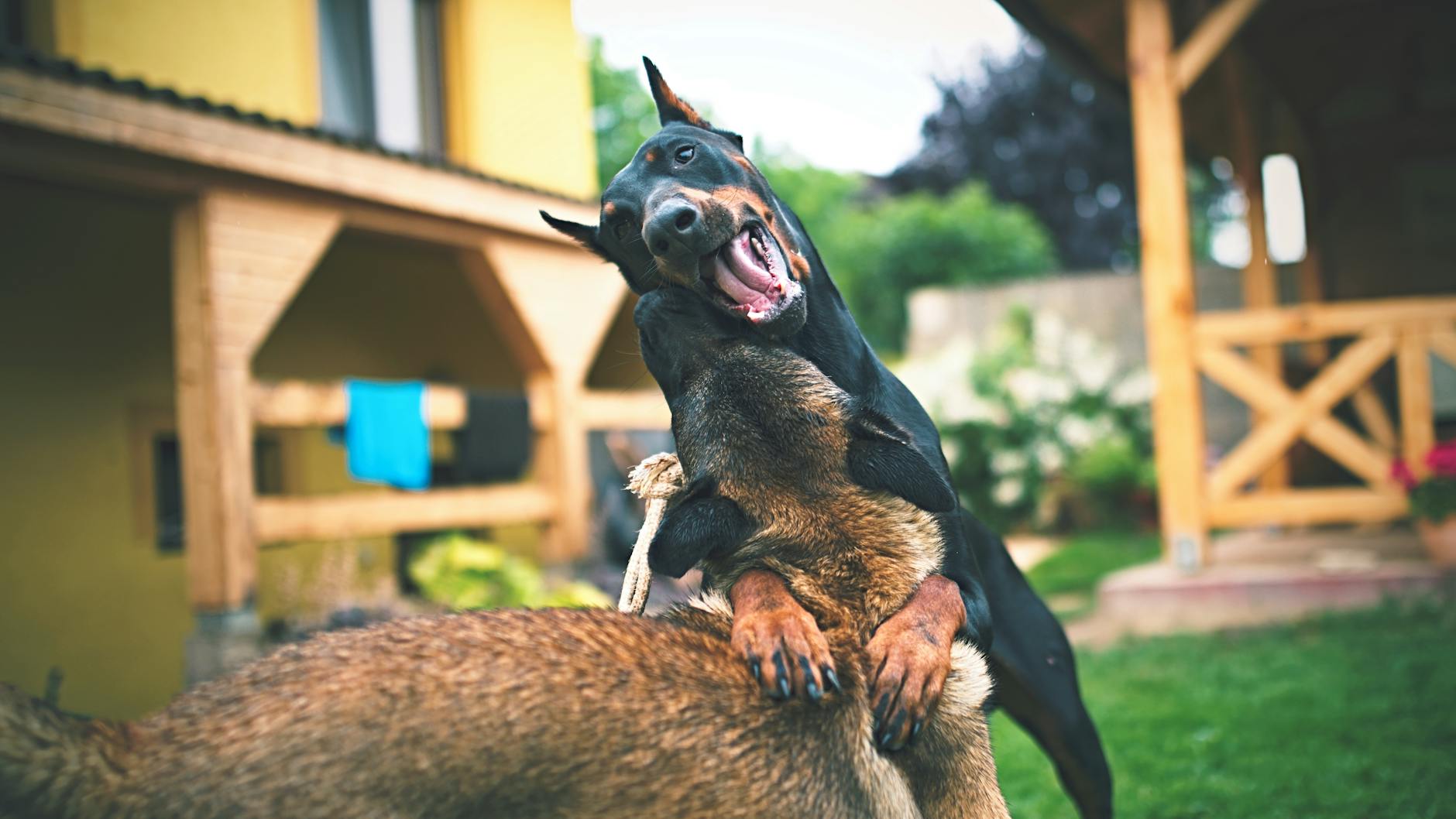
In practice, this means that a Doberman with moderate prey drive but strong defense drive might excel in watchdog or patrol-type work, while another with high prey and rising fight drive may be suited for protection sport.
There’s no single “correct” combination; the key is understanding what your dog genuinely carries and training with clarity instead of assumption.
Dobermans—like all working breeds—typically show traces of all three drive types, but one will surface earlier or more strongly depending on temperament, age, maturity and training history.
A young dog might present almost entirely in prey drive. An older, more confident dog may begin to show a deeper sense of challenge-oriented behaviour associated with fight drive. Defense drive tends to emerge when the dog feels pressured or conflicted.
None of these are inherently “good” or “bad”; they’re information.
Prey Drive: The Foundation Drive
Prey drive is the instinct to chase, catch, grab, possess and carry. It is the most accessible and least conflict-oriented of all the working drives, which is why sport-trained Dobermans often begin their foundation work here.
In the wild, prey drive is tied to hunting behaviour. In working dogs, it becomes the foundation for engagement, grip development and enthusiasm for tasks that involve movement and targeting.
Ethologist Roger Abrantes (1997) defines prey drive as “a predatory behavioural sequence maintained and exaggerated through selective breeding in working and sporting dogs.” Dobermans were intentionally selected for responsive, forward energy—traits that support obedience, tracking, patrol and protection roles. When a young Doberman chases a flirt pole or barks at a tug, they’re rehearsing the pattern that eventually forms the basis for bite development.
High prey drive dogs often show:
• Fast engagement with moving objects
• Clean, full grips when properly trained
• Quick recovery after excitement
• Forward momentum rather than reactivity
Prey drive is not aggression. It is desire. It is the dog seeing the world as opportunities for action.
A Doberman rich in prey drive tends to be fun, biddable and energetic—traits that make foundation work rewarding for both dog and handler.
Defense Drive: The Protective Instinct
Defense drive appears when the dog perceives pressure, conflict or threat.
This is where many misunderstand the Doberman. Because the breed was historically intended to protect, people assume defense is their primary drive, but modern working-line Dobermans tend to sit somewhere in the middle.
Dobermans with too much defense, too early, often struggle with nerve, environmental stress or over-reactivity. Balanced defense emerges as the dog matures and begins assessing situations with more confidence.
Konrad Lorenz’s early research on threat response described defense behaviours as “distance-increasing actions”—movements intended to create space between the dog and the source of pressure. In protection training, this can manifest as barking, posturing, avoidance, or controlled assertiveness depending on the dog’s temperament and experience.
Defense drive is not the same as fear. It is the instinct to protect oneself or one’s handler under real or perceived conflict. When developed correctly and paired with strong nerve and clear-headedness, defense becomes clarity under pressure. When mishandled or triggered prematurely, it becomes anxiety.
A Doberman showing balanced defense drive will typically:
• Hold their position rather than flee
• Bark with rhythm, intent and focus
• Assess the decoy rather than react blindly
• Shift between pressure and engagement without losing control
Defense is the most misunderstood drive in Dobermans because inexperienced handlers interpret any defensive display as maturity.
In reality, early defense without stable nerves is a red flag, not a brag. True defensive strength appears gradually, often after two years old, when the dog’s cognitive and emotional systems catch up to their physical capability.
Fight Drive: The Drive of Engagement and Challenge
Fight drive is the most advanced drive system and the one least likely to appear in young dogs. Many people misinterpret a confident prey-driven dog as having fight drive, but the two are not the same. Prey drive is about action. Fight drive is about challenge, engagement and desire to overcome an opponent or conflict.
Dobermans with genuine fight drive show a shift in mindset: they don’t merely want the reward; they want to stay in the contest. They push into pressure rather than away from it. They derive satisfaction not just from possession but from the process.
As Dr. Helmut Raiser explains in Der Schutzhund (1996), “fight drive is created in the interaction between prey, defense and nerve strength; it matures through controlled conflict and success.” This is why fight drive cannot be developed in dogs without stable nerves or clear working genetics. You cannot train fight drive into a dog that lacks the temperament for it.
True fight drive in Dobermans looks like:
• Calm, confident engagement even under pressure
• Push toward the decoy rather than backward
• Re-engagement after setback or conflict
• Full, powerful grips sustained through difficulty
Fight drive is rare compared to prey and defense, which is why breeders and trainers value it so highly in working lines.
The Relationship Between Drives
While described separately, these three drives interact constantly.
A dog may begin an encounter in prey drive, shift into defense when the decoy applies pressure, and settle into fight drive once they gain confidence.
The ability to transition cleanly between drives is part of what makes a Doberman an exceptional working partner.
In a balanced Doberman:
• Prey drive provides enthusiasm and willingness
• Defense drive provides seriousness and clarity
• Fight drive provides resilience and power
Weak nerves or poor training cause these systems to collide instead of complementing each other. This is why understanding your dog’s specific drive profile is vital—training should support the dog you have, not the dog you imagined.
How Drives Develop Over Time
Drive expression is not static. It changes across life stages.
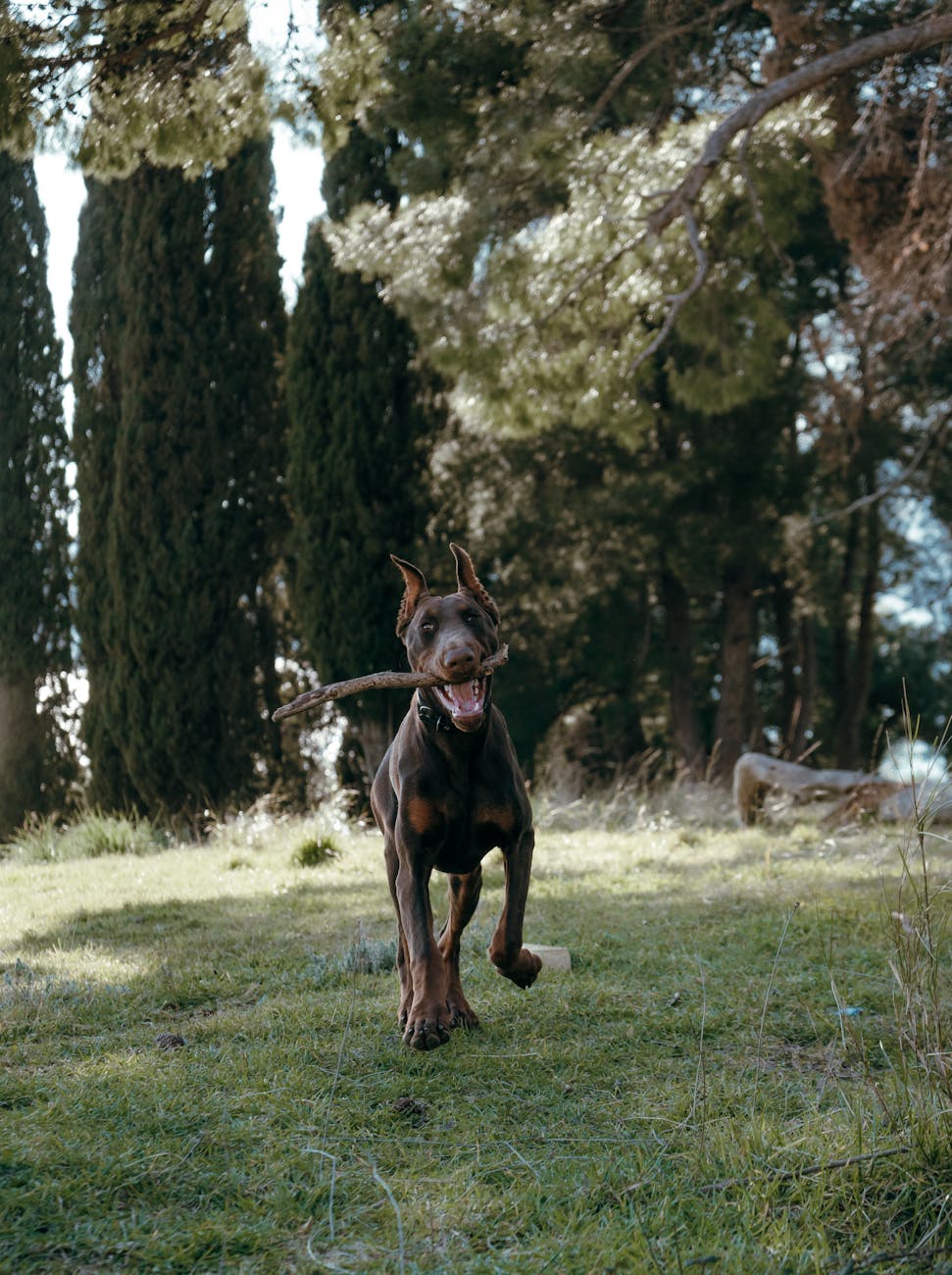
Puppies show mostly prey drive because it’s safe and conflict-free. Adolescents begin experimenting with defensive behaviours, but these displays are often inconsistent. True defense and fight drive require maturity.
Neurological studies such as Bray et al. (2021) demonstrate that “risk assessment, threat discrimination and conflict behaviours do not reach cognitive maturity until approximately 18–24 months in purpose-bred working dogs.” That timeline aligns closely with what most experienced Doberman trainers observe in practice.
Handlers should expect:
• Prey drive early
• Defense drive emerging with maturity
• Fight drive developing last, if at all
Rushing defensive training on a dog without emotional maturity is one of the fastest ways to erode nerve and compromise long-term stability.
Applying Drive Theory to Protection Training
Understanding drive is essential for designing appropriate training sessions. For many young Dobermans, bite work begins with prey-based engagement. The focus is movement, grip and confidence. The goal is to build a dog who sees work as rewarding, not stressful.
As the dog matures, decoys introduce elements of pressure. The handler’s job is to support clarity, not intensity. Defense is allowed to appear only when the dog is ready to process conflict without losing control. Fight drive is layered in gradually, often through challenges that reward resilience.
Handlers should pay attention to:
• Whether the dog becomes frantic or thoughtful under pressure
• Whether grips weaken or deepen during conflict
• Whether recovery is fast or slow
• Whether the dog drives forward or hesitates
These observations matter more than the dog’s “score” or appearance on the field. They reveal the dog’s true foundation.
The Handler’s Role in Drive Development
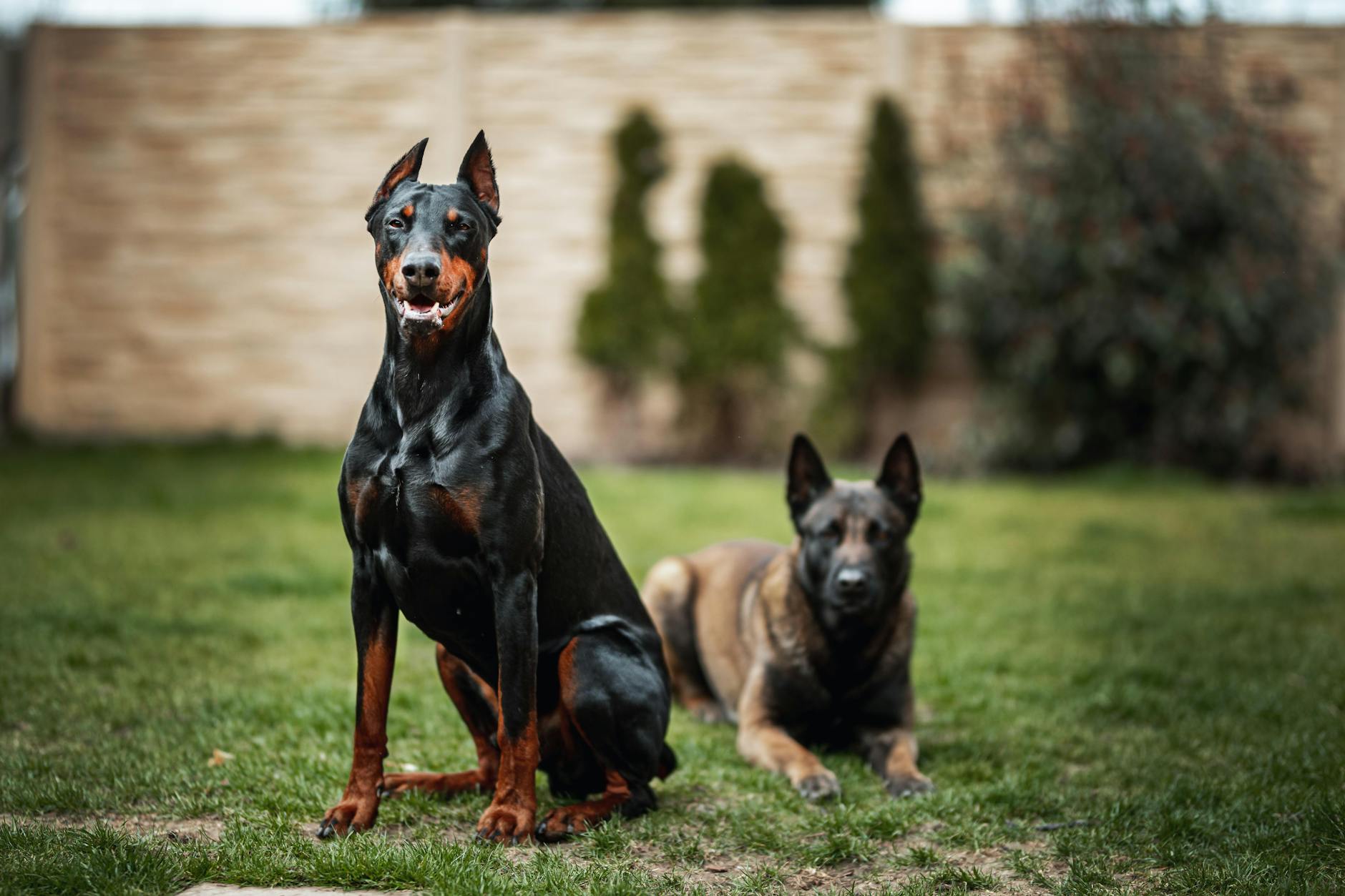
Drive expression is not solely genetic; it is shaped heavily by the handler’s timing, emotional regulation and consistency. Dogs mirror the energy presented to them. A handler who is tense, rushed or unclear often creates defensive uncertainty in the dog, especially in adolescence.
Handlers influence drive development by:
• Maintaining neutrality during pressure scenarios
• Supporting clarity rather than escalating intensity
• Reinforcing recovery and confidence
• Allowing the dog to solve challenges without micromanagement
Drive is not a performance trait—it’s a communication system. When handlers learn to read it, training becomes a conversation rather than a contest.
Why Understanding Drive Matters Beyond Protection Work
Even if someone never intends to do protection, understanding drive explains so much of the Doberman’s temperament: their alertness at home, their enthusiasm for games, their suspicion of threatening behaviour, their need for structured engagement and decompression.
Drive is the blueprint for how the dog interacts with the world.
A Doberman with balanced prey, defense and fight drive tends to be stable, clear-headed and adaptable. A Doberman lacking exposure or emotional regulation often struggles with over-arousal or fear-based reactivity.
Knowing which drive is surfacing helps the handler avoid misinterpreting the behaviour—and prevents well-meaning training from accidentally making things worse.
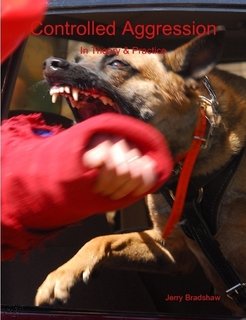
Lessons From Controlled Aggression by Jerry Bradshaw
One of the clearest frameworks for understanding drive development in a working Doberman comes from modern protection-sport methodology, especially the principles outlined in Controlled Aggression. While the book focuses heavily on the structure of bite-work progression, the deeper value comes from what it teaches handlers about pressure, timing, and emotional neutrality.
These themes run underneath every rep on the field, whether a dog is learning to bark, grip, or transition between drives.
A major lesson from controlled-aggression training is that drive itself isn’t the goal — controlled drive is. A dog can have enormous prey, a strong defensive instinct, or a natural willingness to fight, but none of that becomes functional until the dog can channel those drives cleanly under a handler’s direction.
This is where the concept of drive channeling becomes essential. Working Dobermans must learn to move from prey into defense, from defense back into obedience, or from fight drive into a clean outing without collapsing under conflict. Channeling shows whether the dog is thinking or simply reacting.
The book also emphasises understanding defense thresholds. Every dog has a point at which environmental stress or decoy pressure transitions them from curiosity into defensive drive.
A well-bred Doberman typically has a higher threshold than many other breeds, meaning they don’t tip into defense at the slightest provocation.
This is a core trait of real working temperament: a stable dog doesn’t pathologically defend; they defend when appropriate. Knowing a dog’s threshold helps the decoy apply pressure that builds confidence rather than eroding it.
Another critical element is grip development. In controlled-aggression frameworks, grip isn’t just a genetic trait; it’s a reflection of the dog’s ability to stay in the work mentally. Full, calm grips show clarity. Choppy, hectic, or shallow grips often reveal conflict, confusion, or handler pressure bleeding into the session.
Grip quality becomes a visible diagnostic tool — a way to understand what the dog is feeling even when they look outwardly committed.
This leads directly into the topic of conflict management. Working Dobermans enthusiastically engage in the work, but they’re also sensitive, handler-focused dogs.
When the handler becomes tense, inconsistent, or emotionally reactive, the dog often internalises that conflict. Controlled-aggression principles teach that conflict isn’t resolved through more pressure; it’s resolved through clarity.
When a dog understands exactly what ends the pressure and exactly what earns reward, their confidence grows and conflict drops out of the picture.
Neutrality is another lesson that carries into every corner of real-world training.
A dog with strong drives must still be neutral to distractions — people, dogs, noise, new environments. Neutrality isn’t the absence of drive; it’s the dog knowing when their drive is relevant.
Protection dogs who lack neutrality often demonstrate “leaky drive,” where arousal spills into unrelated contexts. Neutrality work teaches the dog to stay switched off until the job begins.
Finally, Controlled Aggression reinforces the importance of a clean, pressure-proof outing.
This is where fight drive, obedience, and emotional stability collide. A dog that outed calmly under pressure didn’t just learn a command — they learned to resolve conflict through obedience and clarity rather than through force.
This is a milestone for any working Doberman: the moment they understand they can stay powerful, committed, and willing while still yielding to the handler’s control.
Together, these concepts create a more complete picture of what drive really means in the Doberman. It isn’t just prey. It isn’t just defense. It isn’t just the willingness to fight. It’s the dog’s ability to understand how to use those drives with intention, clarity, and confidence — and to transition between them seamlessly under the guidance of a handler who manages pressure rather than contributing to it.
Final Thoughts
Drive theory gives handlers a language for understanding what their dog shows them every day. Prey drive builds enthusiasm. Defense drive builds clarity. Fight drive builds resilience. Together, they create the Doberman’s working spirit—a balance of athleticism, awareness and confident engagement.
As your dog matures, these systems shift and sharpen. Some drives deepen. Others stabilise. The goal isn’t to chase a particular profile but to develop the dog in front of you with honesty and patience. When you understand the layers beneath the behaviour, training becomes far more intuitive.
If you’re raising, training, or working a Doberman and want deeper insight into building connection, clarity, and resilience, explore more articles on Stormforge Dobermans. Each post is written from real field experience with balanced training methods, protection-sport foundations, and a commitment to producing thoughtful, stable working dogs.
Leave a Reply