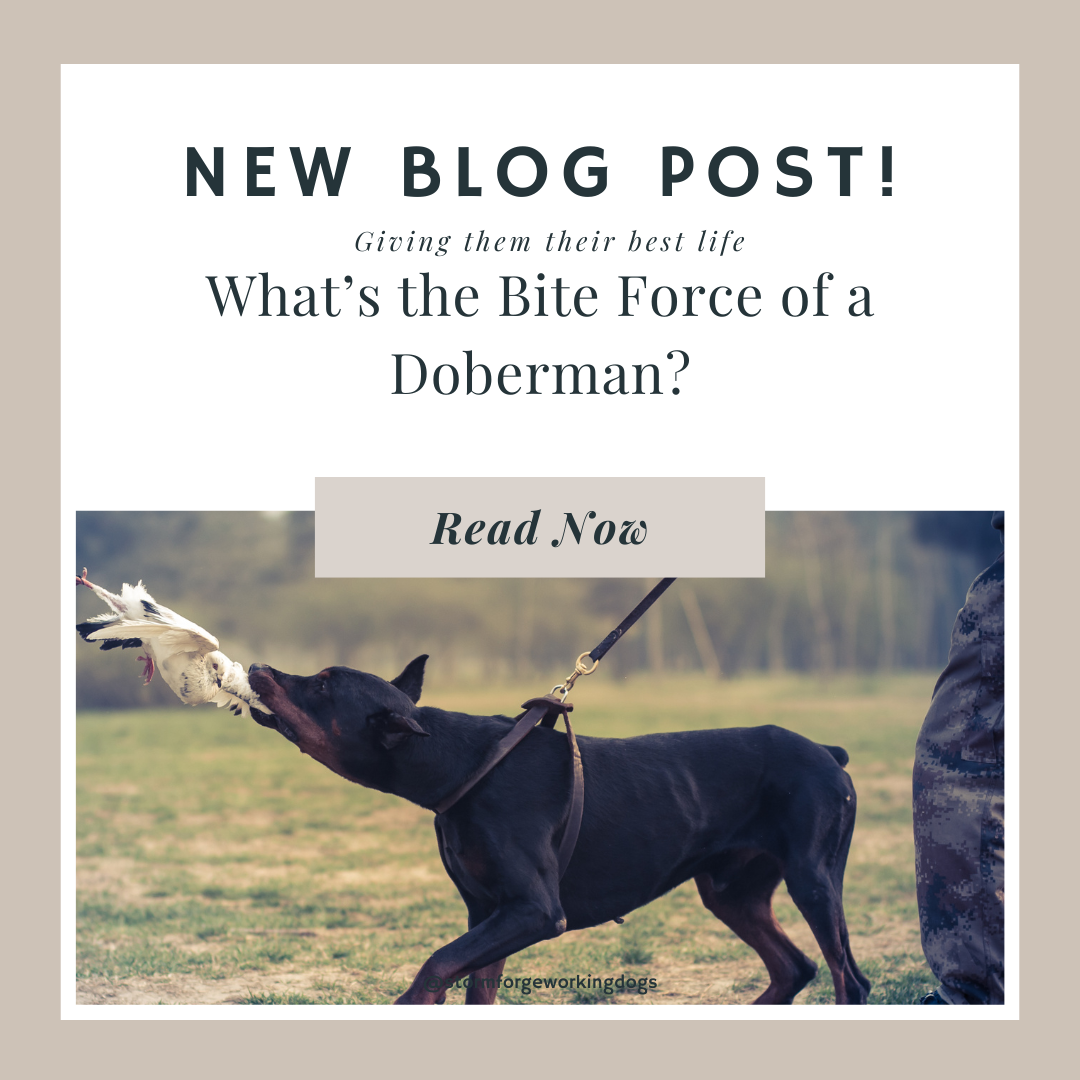
The bite force of a Doberman is a key factor in understanding the breed’s physical strength and effectiveness as a working and protection dog. The Doberman is renowned for its strength, agility, and intelligence, making it a formidable working and guard dog.
Among the many attributes that contribute to its effectiveness in protection work is its bite force. Understanding the bite force of a Doberman provides insight into its physical capabilities and helps highlight the breed’s impressive power.
In this post, we’ll explore the bite force of Dobermans, what factors influence it, and how it plays a role in the breed’s overall characteristics.
Table of Contents
Understanding Bite Force
Bite force is a measure of the pressure exerted by a dog’s jaws when biting. It is typically measured in pounds per square inch (PSI) or kilograms per square centimeter (kg/cm²). This force reflects the strength of the dog’s jaw muscles and the effectiveness of its bite in gripping and holding objects.
To put the Doberman’s bite force into perspective, consider that a human bite exerts around 162 PSI on average. Compared to that, the Doberman’s 230–250 PSI is significantly stronger, demonstrating why this breed is highly respected in protection roles. While bite force is important, it’s just one part of a dog’s overall ability — factors like speed, agility, and intelligence also play crucial roles in their effectiveness.
Why Bite Force Numbers Vary
Bite force estimates for Dobermans vary widely due to differences in measurement techniques. Some studies use pressure sensors in controlled settings, while others rely on anecdotal evidence or outdated data. This variability means figures ranging from 230 to 600 PSI can be found online, but the most accepted scientific range is around 230–305 PSI. It’s important to consider these differences when comparing bite force data.
Additionally, variations in age, health, training, and even motivation during testing can significantly influence results. A young, untrained Doberman will not exert the same bite pressure as a mature, well-conditioned protection dog. This highlights the need to interpret bite force numbers within context rather than as absolute fact.
Misconceptions About Bite Force
It’s common for people to assume that a dog with a strong bite force is naturally aggressive, but that’s not the case with Dobermans. Their bite strength is a tool, controlled and directed by proper training and temperament. Responsible ownership and consistent socialization are essential to ensure this powerful attribute is expressed safely and appropriately.
In reality, most Dobermans are deeply loyal and eager to please. Their protective instincts are strong, but aggression is not their default. They are discerning, intelligent animals that respond to perceived threats rather than acting out indiscriminately.
The Bite Force of a Doberman
Measured Bite Force: On average, the bite force of a Doberman ranges between 230 to 250 PSI (approximately 16 to 18 kg/cm²). This is a considerable bite force, placing Dobermans among the stronger dog breeds. For comparison, this is significantly higher than many common breeds and rivals that of other large working dogs like the German Shepherd and Rottweiler.
Factors Influencing Bite Force:
- Jaw Structure: The strength of a Doberman’s bite is partly due to its robust jaw structure. Dobermans have well-developed jaw muscles that contribute to their powerful bite.
- Training and Conditioning: While natural bite force is significant, training and conditioning can further enhance a Doberman’s biting capability. Protection training, for example, can strengthen their bite and improve their control and precision.
- Health and Genetics: A Doberman’s health and genetic background also play a role in its bite force. Well-maintained dental health and strong, properly aligned teeth contribute to an effective bite.
Nutrition also plays a subtle role. A well-fed Doberman with adequate muscle tone and jaw development will always have a stronger, more effective bite than a dog lacking protein or struggling with dental issues.
Comparing Bite Force Across Breeds
When discussing bite force, it’s helpful to compare the Doberman’s strength with other dog breeds. For instance, the Rottweiler’s bite force averages around 328 PSI, while the German Shepherd clocks in near 238 PSI. Though not the strongest, Dobermans hold their own impressively, especially considering their agility and speed. This combination of power and athleticism makes them versatile working dogs capable of a range of protective duties.
| Breed | Average Bite Force (PSI) |
|---|---|
| Doberman Pinscher | 230 – 305 |
| Rottweiler | 328 |
| German Shepherd | 238 |
| Pit Bull | 235 – 250 |
| Mastiff | 552 |
(Sources: Various canine research studies and expert estimates)
It’s important to note that bite force alone doesn’t determine how effective or dangerous a dog is — temperament, training, and environment play equally critical roles.
How Bite Force Relates to Training and Behavior
Bite force alone doesn’t determine a dog’s behavior or aggression. The Doberman’s temperament is shaped significantly by its training and social environment. Well-trained Dobermans use their bite force responsibly, responding to commands and only engaging when necessary. Understanding this distinction helps dispel fears that a strong bite means an uncontrollable dog.
Training programs that involve bite work — such as IPO, Schutzhund, or protection dog training — focus not just on bite strength, but also on precision, control, and release on command. A Doberman trained in this manner understands when and how to bite, as well as when to stop.
The Role of Bite Force in the Doberman’s Abilities
- Protection Work: The considerable bite force of Dobermans makes them effective in protection work. Their ability to deliver a powerful bite helps them excel in roles such as guarding, search and rescue, and police work. This strength allows them to subdue potential threats effectively, adding to their reputation as reliable guard dogs.
- Training and Control: Despite their impressive bite force, Dobermans are known for their trainability and control. Proper training ensures that their bite is used appropriately and that they respond to commands and cues effectively. This balance of strength and obedience makes them valuable working partners.
- Athletic Performance: The Doberman’s bite strength is just one component of its physical toolkit. Their lean, muscular build, endurance, and coordination allow them to handle complex tasks with agility and precision. Whether leaping obstacles or pursuing intruders, bite strength enhances their effectiveness.
Safety and Responsibility
While the bite force of a Doberman is a testament to its strength and capabilities, it’s essential for owners to approach this characteristic with responsibility.
Ensuring that Dobermans are well-trained, socialised, and managed properly helps prevent misuse of their powerful bite. Training programs should focus on control, obedience, and positive reinforcement to foster a well-behaved and balanced dog.
Owning a Doberman comes with unique responsibilities due to their impressive bite force. Many regions have specific regulations or insurance requirements for powerful breeds like Dobermans.
Understanding local laws about dog ownership, leash rules, and liability is crucial to ensure you and your dog stay safe and compliant. Responsible owners who respect these legal considerations help promote a positive reputation for the breed and reduce risks associated with their natural strength.
In addition, early socialisation is key. Introducing your Doberman to different people, environments, and other animals during puppyhood builds confidence and reduces fear-based reactions, which are more likely to lead to inappropriate use of strength.
Busting Myths About Doberman Bite Force
Many myths exaggerate Doberman bite strength and its connection to aggression. Some claim Dobermans have the strongest bite of any dog, or that a powerful bite means the dog is naturally aggressive. These statements are misleading.
While Dobermans have a powerful bite, they are not inherently aggressive. Their temperament is shaped by training, socialisation, and responsible ownership. Bite force is simply one of many traits that make the Doberman a capable working dog.
In truth, the Doberman’s strength is balanced by a highly trainable, people-focused disposition. With proper training and care, they are among the most loyal and trustworthy dogs a person can own.
Appreciating the Doberman’s Power
The impressive bite force of the Doberman is just one aspect of what makes this breed exceptional. Coupled with their intelligence, agility, and loyalty, their physical strength underscores their capabilities as working dogs and loyal companions. Understanding this attribute helps highlight the breed’s unique qualities and the respect they command as powerful and effective dogs.
Bite force should be viewed in the broader context of what the Doberman brings to the table: a loyal protector, a dedicated worker, and a deeply bonded family member. Appreciating this balance is essential for prospective owners who want a dog that offers both strength and sensitivity.
Final Thoughts
Understanding the bite force of a Doberman helps us appreciate the impressive physical capabilities of this breed. If you’re considering adding a Doberman to your family or training one for protection work, knowledge of their strengths is vital. For more insights into Doberman care, training, and behavior, subscribe to our kennel blog and stay informed with expert advice tailored to this remarkable breed.
When trained responsibly and given structure, a Doberman is more than its bite force — it’s a partner, protector, and friend for life. adding a Doberman to your family or training one for protection work, knowledge of their strengths is vital. For more insights into Doberman care, training, and behavior, subscribe to our kennel blog and stay informed with expert advice tailored to this remarkable breed.

Leave a Reply